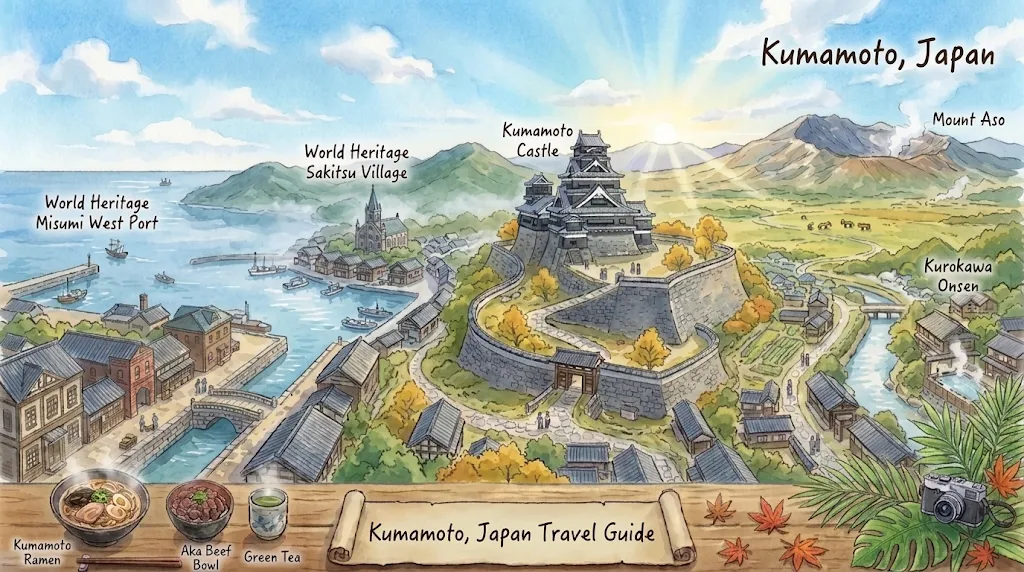
Located in central Kyushu, Kumamoto Prefecture combines castle history and port heritage with volcanic calderas, mountain hot springs, and coastal villages[cite: 10]. Because Mount Aso, Kurokawa Onsen, and Amakusa sit well outside central Kumamoto City, checking train/bus schedules and travel times ahead helps keep plans realistic[cite: 10]. Here is a practical guide to key spots, getting around Kumamoto, and a sample 1-day itinerary.
🚆 Getting Around Kumamoto
Kumamoto Station (served by the Kyushu Shinkansen and JR lines) and the city tram network make getting around central Kumamoto straightforward. For Aso, Kurokawa Onsen, and Amakusa, highway/local buses, sightseeing trains, or a rental car are key.
| Destination Area | Typical Route from Kumamoto City | Approx. Travel Time |
|---|---|---|
| Kumamoto Castle | Kumamoto City Tram (streetcar) from Kumamoto Station to Kumamotojo-mae or Hanabatacho, then walk | 20–30 mins |
| Misumi West Port | JR Misumi Line from Kumamoto Station to Misumi Station (~50–60 mins), then short taxi/bus/walk | ~1 hr–1 hr 15 mins |
| Mount Aso & Kurokawa Onsen | JR Hohi Line (including Aso Boy!) to Aso area, or Kyushu Crossway Bus / rental car toward Aso and Kurokawa | 1 hr 30 mins–3 hrs (varies by stop & transit) |
| Sakitsu Village (Amakusa) | Rental car, guided tour, or bus/train + bus connections across Amakusa from Kumamoto City | ~2 hrs 30 mins–3 hrs+ each way |
Practical note: Mountain buses around Aso and Kurokawa Onsen and rural routes in Amakusa run less frequently than city trams, so check return schedules and seat reservations in advance.
📍 Key Sights, Onsen & Local Food
⚓ Misumi West Port (Meiji Industrial Heritage)[cite: 10]
Completed in 1887 and inscribed as part of the UNESCO World Heritage listing for Sites of Japan’s Meiji Industrial Revolution, Misumi West Port preserves historic stone wharves, canals, and Meiji-era architecture[cite: 10].
Practical tip: Waterfront paths and stone quays have uneven edges near the water—watch your step near the seawall and check local bus or train intervals between Misumi and Amakusa.
⛪ Sakitsu Village in Amakusa (Hidden Christian Sites)[cite: 10]
Part of the UNESCO World Heritage “Hidden Christian Sites in the Nagasaki Region,” Sakitsu Village is a coastal fishing community in Amakusa known for its history of covert faith and Sakitsu Church[cite: 10].
Practical tip: Sakitsu is an active local community and place of worship—keep voices low inside church buildings, follow photography/visitor rules, and allow plenty of travel time if visiting from Kumamoto City.
🏯 Kumamoto Castle & Restoration Highlights[cite: 10]
Founded in 1607 by Kato Kiyomasa, Kumamoto Castle is famous for its steep stone walls (musha-gaeshi), castle keep exhibits, and ongoing restoration work following the 2016 earthquakes[cite: 10].
Practical tip: Because restoration routes and viewing walkways are carefully managed, follow the designated visitor route and check admission hours and last entry times before going.
🌋 Mount Aso & Kurokawa Onsen[cite: 10]
Mount Aso features a vast caldera, grasslands, and volcanic peaks, while Kurokawa Onsen in the northern mountains is known for wooden ryokan inns and outdoor hot spring baths (rotenburo)[cite: 10].
Practical tip: Volcanic gas or alert levels can temporarily restrict access near Aso’s crater rim—check current safety status on the day of your visit. At Kurokawa Onsen, check valid hours and tattoo/bathing rules if using a multi-bath pass (nyuto tegata) or ryokan bath, and dress warmly in cooler mountain months.
🍜 What to Eat: Akaushi Beef, Taipien & Kumamoto Ramen[cite: 10]
Kumamoto specialties include akaushi (Aso brown cattle beef, often served over rice as akaushi-don), taipien (a vegetable- and seafood-topped glass noodle soup), and Kumamoto ramen (pork-bone broth accented with roasted garlic oil / mayu)[cite: 10]. Popular akaushi-don spots around Aso often draw lines at lunch or sell out for the day, so arriving early or making a reservation helps.
🗓️ Sample 1-Day Itinerary: Kumamoto City & Misumi West Port
Sakitsu Village in Amakusa and Kurokawa Onsen are best enjoyed with extra time or an overnight stay. For a 1-day trip that combines central Kumamoto with coastal heritage, pairing Kumamoto Castle with Misumi West Port works well[cite: 10]:
- 09:00 – Kumamoto Castle: Take the city tram from central Kumamoto and tour the castle grounds and keep in the morning[cite: 10].
- 11:30 – Lunch in Central Kumamoto: Try Kumamoto ramen or taipien near the castle or downtown[cite: 10].
- 13:30 – Ride to Misumi West Port: Head southwest by JR train (toward Misumi) or car to explore the historic stone port[cite: 10].
- 15:00 – Waterfront Walk & Cafe Break: Walk along the stone wharves and canals and enjoy the coastal views[cite: 10].
- 17:30+ – Return to Kumamoto City for Dinner: Head back into the city for dinner and local specialties[cite: 10].
Plan Your Stay & Passes in Kumamoto
Compare hotels near Kumamoto Castle or ryokan in Kurokawa Onsen, and check tours or rail passes.