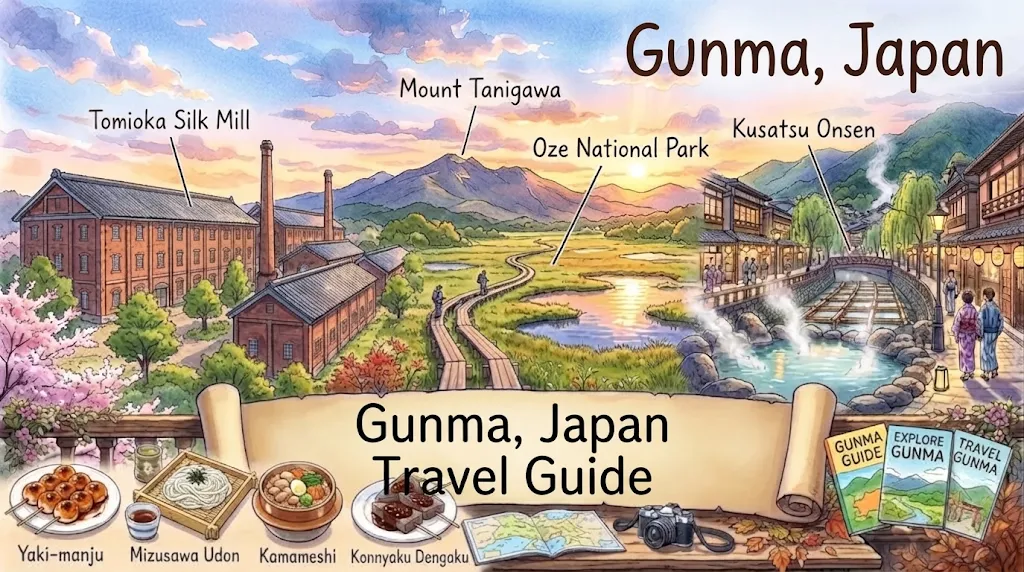
Inland in central-eastern Japan, Gunma Prefecture pairs the UNESCO-listed Tomioka Silk Mill with hot spring resorts in Kusatsu and Ikaho, highland wetlands in Oze National Park, and local specialties like Mizusawa udon and konnyaku. Because mountain weather, seasonal park closures, and bus/rail connections affect timing, checking schedules ahead helps keep plans smooth[cite: 21]. Here is a practical guide to key spots, getting around Gunma, and a sample 1-day itinerary[cite: 21].
🚆 Getting Around Gunma
Takasaki Station (served by the Joetsu/Hokuriku Shinkansen and JR lines) connects into Gunma’s rail lines, while highway buses, local buses, and rental cars link major hot spring towns, silk heritage, and mountain trailheads.
| Destination Area | Typical Transit Route | Approx. Travel Time |
|---|---|---|
| Tomioka Silk Mill | Joshin Electric Railway from Takasaki Station to Joshu-Tomioka Station (~40–45 mins), then ~10 min walk | ~50–60 mins from Takasaki Station |
| Kusatsu Onsen | Direct highway bus from Tokyo/Shinjuku (~3.5–4 hrs) or JR Agatsuma Line to Naganohara-Kusatsuguchi Station + route bus (~25–30 mins) | ~3.5–4 hrs by highway bus; ~2+ hrs via Takasaki/Naganohara |
| Ikaho Onsen | JR Joetsu/Agatsuma Line from Takasaki to Shibukawa Station + route bus (~20–25 mins), or direct highway bus from Tokyo | ~45–60 mins from Takasaki via Shibukawa |
| Oze National Park (Gunma Trailheads) | Seasonal bus/taxi connections from Numata / Jomo-Kogen area toward Oze trailheads (such as Hatayama/Oshimizu), or rental car | ~1.5–2.5+ hrs from Numata/Jomo-Kogen (seasonal) |
Practical note: Kusatsu Onsen sits at higher elevation with cold winters and snow, while Oze buses run seasonally—check road/bus conditions and return times ahead.
📍 Key Sights, Onsen, Nature & Local Food
🏭 Tomioka Silk Mill (UNESCO World Heritage)
Established in 1872 and inscribed as a UNESCO World Heritage site, the Tomioka Silk Mill preserves historic brick and timber silk-reeling buildings from Japan’s modernization era[cite: 21].
Practical tip: Check opening/last-entry hours and any closed days in advance, and wear comfortable walking shoes for moving between buildings across the site.
♨️ Kusatsu Onsen: Yubatake, Yumomi & Hot Spring Waters
Known for abundant acidic hot spring water, Kusatsu Onsen centers on the steaming Yubatake hot-water field in town and traditional Yumomi water-cooling shows[cite: 21].
Practical tip: Kusatsu’s acidic spring water is strong on sensitive skin and can sting small cuts or irritate eyes—rinse after bathing if advised, check Yumomi show times and tickets ahead, and dress warmly for chilly mountain air.
⛩️ Ikaho Onsen & The 365 Stone Steps
In central Gunma, Ikaho Onsen is famous for its 365 stone steps leading up past shops and inns toward Ikaho Shrine, along with iron-rich reddish-brown and clear spring waters[cite: 21].
Practical tip: Climbing and descending the stone steps takes steady footing—wear supportive, non-slip shoes and allow extra time if walking up toward the shrine.
🌿 Oze National Park Boardwalks & Wetlands
Spanning Gunma and neighboring prefectures, Oze National Park protects high-elevation marshlands with wooden boardwalks, mizubasho skunk cabbage blossoms in late spring, and autumn colors[cite: 21].
Practical tip: Oze is closed during winter/snow months and wooden boardwalks get slippery when wet—check seasonal open dates, wear grippy shoes and rain gear, carry out all trash, and watch daylight and bus departure times carefully.
🍜 What to Eat: Mizusawa Udon, Konnyaku & Local Specialties
Gunma specialties include Mizusawa udon (known for smooth, chewy noodles near Ikaho Onsen, often served with dipping sauce), konnyaku dishes and sweets, along with regional favorites like yaki-manju and kamameshi[cite: 21]. Popular Mizusawa udon restaurants often draw waits around lunch, so arriving slightly early helps.
🗓️ Sample 1-Day Itinerary: Tomioka Silk Mill & Ikaho Onsen
Kusatsu Onsen and Oze National Park each work well as a dedicated day trip or overnight stay. For a 1-day trip connecting heritage and hot springs in central Gunma, pairing Tomioka Silk Mill with Ikaho Onsen and Mizusawa udon works smoothly[cite: 21]:
- 09:00 – Tomioka Silk Mill: Tour the historic silk-reeling complex in the morning[cite: 21].
- 12:00 – Mizusawa Udon Lunch: Head toward the Ikaho area for Mizusawa udon[cite: 21].
- 14:00 – Ikaho 365 Stone Steps & Town Walk: Stroll the stone steps, shops, and historic streets[cite: 21].
- 16:00 – Hot Spring Soak: Relax in thermal waters before heading back[cite: 21].
- 18:00+ – Return Toward Takasaki or Tokyo: Catch a bus or train back toward Takasaki Station or Tokyo.
Plan Your Stay & Passes in Gunma
Compare hot spring ryokan in Kusatsu or Ikaho, or city stays near Takasaki, and check buses, tours, or passes[cite: 21].