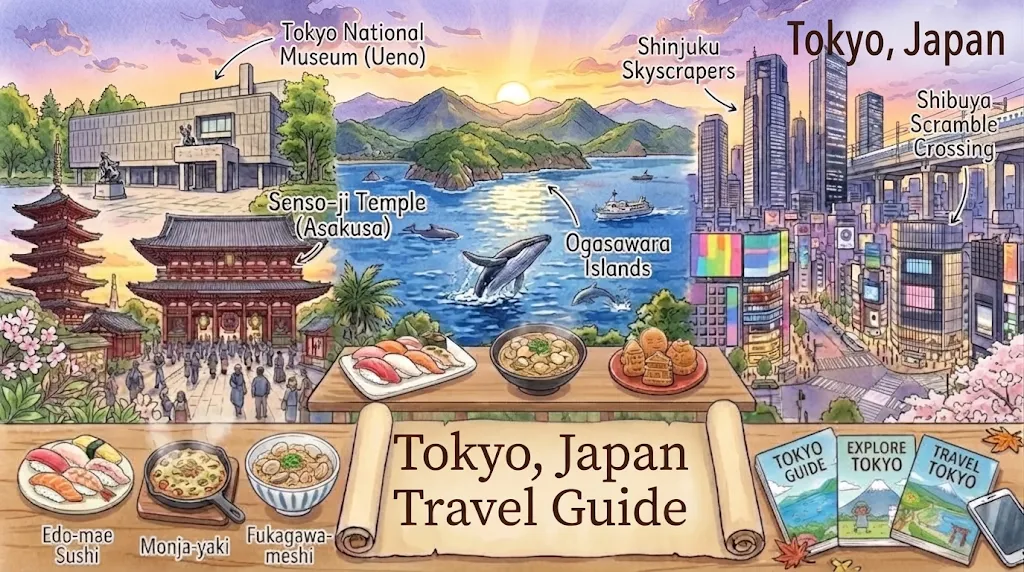
Tokyo brings together historic temples, modern skyscrapers, bustling shopping districts, and remote islands under one administrative umbrella. Because distances, station transfers, and operating hours vary widely across the city, grouping sights by area and planning transit ahead saves time. Here is a practical guide to key neighborhoods, getting around central Tokyo, and a sample 1-day itinerary.
🚇 Getting Around Tokyo
Central Tokyo is served by JR lines, Tokyo Metro, and Toei Subway lines. Rechargeable IC cards (Suica, PASMO, ICOCA, etc.) work across almost all trains, subways, and city buses, though you can also use day passes when concentrating on subway routes.
| Area / Corridor | Typical Rail / Transit Access | Practical Notes |
|---|---|---|
| Ueno & Asakusa | Tokyo Metro Ginza Line (direct between Ueno and Asakusa in ~5 mins) or JR Yamanote / Keihin-Tohoku Line to Ueno | Great for a half-day or full-day walking loop on Tokyo’s east side |
| Marunouchi & Ginza | JR Yamanote / Keihin-Tohoku Line to Tokyo or Yurakucho Station; Tokyo Metro Marunouchi or Ginza Line | Walking distance between Tokyo Station, Imperial Palace grounds, and Ginza |
| Shinjuku & Shibuya | JR Yamanote Line (~7–10 mins between Shinjuku and Shibuya), Saikyo Line, or Tokyo Metro Fukutoshin Line | Massive station complexes—give yourself extra time for transfers and exits |
| Ogasawara Islands | Ferry (Ogasawara Maru) departing from Takeshiba Pier near Hamamatsucho / Hinode | ~24 hours each way; sailings run only once every several days |
Practical note: Avoid traveling during weekday morning rush hour (roughly 07:45–09:00) with large luggage if possible, and check last-train times around midnight, as trains run less frequently late at night.
📍 Key Areas, Sights & Local Food
🏛️ Ueno & Asakusa: Museums, Parks & Senso-ji
Ueno Park is home to major museums—including the UNESCO-listed National Museum of Western Art (designed by Le Corbusier) and Tokyo National Museum—while Asakusa centers around Senso-ji, Kaminarimon Gate, and Nakamise shopping street.
Practical tip: Most museums in Ueno are closed on Mondays (or the next weekday if Monday is a national holiday), so check calendars before planning. In Asakusa, visit Senso-ji early in the morning for fewer crowds, and keep in mind that many Nakamise stalls open around 09:00–10:00 and close in the early evening.
🐋 Ogasawara Islands: Remote Natural World Heritage
Located roughly 1,000 kilometers south of central Tokyo, the Ogasawara Islands (such as Chichijima and Hahajima) are inscribed as a UNESCO Natural World Heritage site for their isolated oceanic ecosystem, marine life, and whale-watching season.
Practical tip: Because the ferry takes about 24 hours each way and operates on a multi-day schedule, a round trip typically requires at least several days to a week. Booking ferry tickets, island lodging, and eco-tours well ahead of time is essential.
🌃 Shibuya & Shinjuku: Nightlife, Shopping & Quiet Parks
Shibuya (known for the scramble crossing and nearby Harajuku) and Shinjuku (home to Kabukicho, Golden Gai, and Shinjuku Gyoen National Garden) offer busy commercial hubs alongside calmer green spaces.
Practical tip: Shinjuku Gyoen has set opening and closing hours and charges an admission fee, and alcohol is not permitted inside. In tiny alleys like Golden Gai, check cover charges and house rules before sitting down, as seating is limited.
✨ Marunouchi & Ginza: Imperial Grounds & Broad Streets
Marunouchi connects Tokyo Station with the Imperial Palace area, while Ginza is known for department stores, flagship shops, galleries, and cafes.
Practical tip: Ginza’s main Chuo-dori avenue typically becomes a pedestrian-only promenade (Hokosha Tengoku) on weekend afternoons weather permitting. If you visit the Imperial Palace East Gardens, check garden closure days and admission procedures in advance.
🍣 What to Eat in Tokyo: Sushi, Monjayaki & Fukagawa-meshi
Tokyo is famous for Edomae-style sushi (around Toyosu Market and Tsukiji outer market), monjayaki (savory griddle-cooked batter popular in Tsukishima), and Fukagawa-meshi (a traditional Tokyo bay dish of clams and vegetables over rice or in miso broth). Popular sushi counters and monjaya spots often draw lines at lunch and dinner, and some market stalls close by early afternoon.
🗓️ Sample 1-Day Itinerary: East Side & Bay Area
Rather than zig-zagging across the entire metropolis in one day, grouping Asakusa, Ueno, and a bay-side or central stop keeps transit short:
- 08:30 – Senso-ji & Asakusa Morning Walk: Explore the temple grounds and surrounding streets before midday crowds peak.
- 11:00 – Ueno Park & Museums: Take the Ginza Line to Ueno and visit a museum or stroll through the park.
- 13:30 – Lunch in Ueno or Tsukiji / Ginza: Enjoy sushi, tonkatsu, or soba, then walk toward Ginza or Marunouchi.
- 16:00 – Ginza & Marunouchi Walk: Browse shops or walk around the Tokyo Station and Imperial Palace area.
- 18:30 – Dinner (Monjayaki or Izakaya): Head to Tsukishima for monjayaki or stay near Yurakucho / Tokyo Station for dinner.
Plan Your Stay & Tickets in Tokyo
Compare hotels across Ueno, Shinjuku, Shibuya, or Ginza, or book attraction tickets and transit passes in advance.