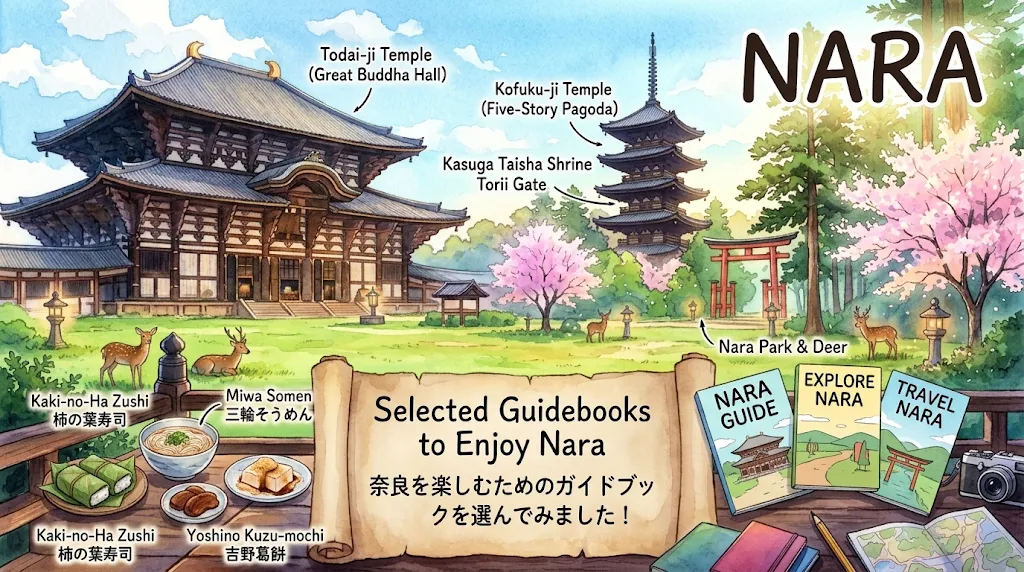
Nara: Horyu-ji Temple and the Historic Monuments of Ancient Nara
奈良:法隆寺と古都奈良の文化財、日本文化の原点
Before Kyoto, Nara served as Japan’s first permanent capital, known as Heijo-kyo, established in 710 CE. It is widely regarded as the cradle of Japanese arts, crafts, literature, and Buddhist culture. Nara is exceptional because it boasts two distinct UNESCO World Heritage designations: the “Buddhist Monuments in the Horyu-ji Area” (registered in 1993, Japan’s first World Heritage site) and the “Historic Monuments of Ancient Nara” (registered in 1998). From the world’s oldest surviving wooden structures to the colossal bronze Great Buddha and the sacred free-roaming deer of Nara Park, the city offers an unparalleled window into ancient East Asian history and early Japanese civilization. This comprehensive guide covers the most historically significant locations in Nara to help international visitors navigate its profound heritage.
京都よりも前、奈良は710年に平城京として制定された日本初の恒久的な首都でした。日本の美術、工芸、文学、そして仏教文化の揺りかごとして広く認識されています。奈良が特別なのは、「法隆寺地域の仏教建造物」(1993年登録、日本初の世界遺産)と、「古都奈良の文化財」(1998年登録)という、2つの独立したユネスコ世界遺産を有している点です。世界最古の現存する木造建築物から、巨大な青銅製の大仏、そして奈良公園を自由に歩き回る神聖な鹿まで、この都市は古代東アジアの歴史と初期の日本文明を知るための比類のない窓を提供しています。本ガイドでは、外国人訪問者がその奥深い遺産をナビゲートできるよう、奈良で最も歴史的に重要な場所を網羅しています。
🏯 Horyu-ji Temple: The World’s Oldest Wooden Structures (世界遺産「法隆寺」:世界最古の木造建築)
Founded in 607 CE by Prince Shotoku, an early champion of Buddhism in Japan, Horyu-ji Temple is a monument of global architectural and historical significance. The temple’s Western Precinct (Sai-in Garan) contains the Kondo (Main Hall) and the Goju-no-To (Five-Story Pagoda), which are universally recognized as the oldest surviving wooden buildings in the world. These structures showcase the architectural styles of the Asuka period, heavily influenced by the arts of China’s Six Dynasties and Korea’s Three Kingdoms.
The complex houses an extraordinary collection of over 2,300 designated national treasures and important cultural properties, including the elegant Kudara Kannon statue. Walking through Horyu-ji is akin to stepping back 1,400 years in time, offering a profound sense of the deep roots of Japanese Buddhism.
日本における仏教の初期の擁護者であった聖徳太子によって607年に創建された法隆寺は、世界的な建築および歴史的意義を持つ記念碑です。寺院の西院伽藍(さいいんがらん)には金堂と五重塔があり、これらは現存する世界最古の木造建築物として普遍的に認識されています。これらの建造物は、中国の六朝時代や朝鮮の三国時代の芸術に強い影響を受けた飛鳥時代の建築様式を示しています。
この寺院群には、優美な百済観音像(くだらかんのんぞう)をはじめとする、2,300点を超える国宝や重要文化財の並外れたコレクションが収蔵されています。法隆寺を歩くことは1400年の時を遡るようなものであり、日本仏教の深いルーツを強く感じさせてくれます。
🛕 Todai-ji Temple and the Great Buddha (世界遺産「東大寺」と巨大な大仏)
Constructed in 752 CE on the orders of Emperor Shomu to bring peace and prosperity to the nation, Todai-ji is one of Japan’s most famous and historically significant temples. Its main hall, the Daibutsuden (Great Buddha Hall), held the record as the world’s largest wooden building until modern times, despite the current reconstruction from 1709 being only two-thirds of its original size.
Inside the massive hall sits the Daibutsu (Vairocana Buddha), a monumental bronze statue standing 15 meters (nearly 50 feet) tall and weighing roughly 500 tons. The sheer scale of both the architecture and the statue leaves a lasting impression on visitors, symbolizing the immense political and religious power of the ancient Nara period.
国家の平和と繁栄をもたらすために聖武天皇の命により752年に建立された東大寺は、日本で最も有名で歴史的に重要な寺院の1つです。その本堂である大仏殿は、1709年に再建された現在の建物が元の大きさの3分の2にすぎないにもかかわらず、近代まで世界最大の木造建築物としての記録を保持していました。
巨大な堂内には、高さ15メートル(約50フィート)、重さ約500トンに及ぶ記念碑的な青銅の像である大仏(盧舎那仏)が鎮座しています。建築と仏像の両方の桁外れのスケールは訪問者に強い印象を残し、古代奈良時代の絶大な政治的・宗教的権力を象徴しています。
🦌 Kasuga Taisha and the Sacred Deer (世界遺産「春日大社」と神の使いの鹿)
Established in 768 by the powerful Fujiwara clan, Kasuga Taisha is Nara’s most celebrated Shinto shrine. The shrine is famous for its striking vermilion-lacquered buildings and the thousands of bronze and stone lanterns that line the pathways, all donated by worshippers over centuries. The shrine’s architecture harmonizes perfectly with the surrounding primeval forest, Kasugayama, which has been preserved untouched for over a thousand years.
The shrine is located within the expansive Nara Park, home to over 1,000 free-roaming sika deer. In Shinto belief, these deer are considered sacred messengers of the gods. Today, they are a symbol of the city and have been designated as a national natural treasure. Visitors can interact with them by feeding them special “deer crackers” (shika-senbei) sold throughout the park.
有力な藤原氏によって768年に創建された春日大社は、奈良で最も有名な神社です。この神社は、印象的な朱塗りの社殿と、参道に並ぶ何千もの青銅や石の灯籠で有名であり、これらはすべて何世紀にもわたって参拝者から寄進されたものです。神社の建築は、1000年以上にわたって手つかずのまま保存されている周囲の原生林(春日山)と完璧に調和しています。
神社は広大な奈良公園内にあり、ここには1,000頭以上のシカが自由に歩き回っています。神道の信仰において、これらの鹿は神の神聖な使い(神鹿)と見なされています。現在、鹿は都市の象徴であり、国の天然記念物に指定されています。訪問者は、公園内で販売されている専用の「鹿せんべい」を与えて鹿と触れ合うことができます。
🏯 Kofuku-ji Temple: The Symbol of Nara (世界遺産「興福寺」:古都のシンボル五重塔)
Also founded by the Fujiwara clan, Kofuku-ji Temple once comprised over 150 buildings at the height of its power. Today, its most prominent surviving structure is the magnificent Five-Story Pagoda (Goju-no-To). Standing at 50 meters tall, it is the second-tallest wooden pagoda in Japan and serves as the iconic visual symbol of Nara.
The temple’s National Treasure Museum is a must-visit, housing an exceptional collection of Buddhist art, most notably the six-armed, three-faced Ashura statue from the 8th century, which is renowned for its delicate, sorrowful expression and is widely considered a masterpiece of Japanese sculpture.
同じく藤原氏によって創建された興福寺は、その権力の絶頂期には150以上の建物を擁していました。現在、現存する最も目立つ建造物は壮麗な五重塔です。高さ50メートルに及ぶこの塔は日本で2番目に高い木造塔であり、奈良の象徴的な視覚的シンボルとして機能しています。
寺院の国宝館は必見であり、仏教美術の優れたコレクションを収蔵しています。中でも最も注目すべきは8世紀に作られた六臂三面の阿修羅像で、その繊細で憂いを帯びた表情で知られ、日本彫刻の傑作として広く評価されています。
🍣 Nara Cuisine: Preserving Ancient Tastes (奈良の食文化:古代の知恵を受け継ぐ伝統食)
Because Nara is a landlocked prefecture, its traditional cuisine developed around sophisticated preservation techniques. The most famous local dish is **Kakinoha-zushi** (persimmon leaf sushi). Bite-sized blocks of vinegared rice topped with cured mackerel or salmon are wrapped in fragrant persimmon leaves, which possess natural antibacterial properties. This allowed the seafood to be transported safely from the ocean to the ancient capital.
Another historical staple is **Miwa Somen**, ultra-fine wheat noodles with a history of over 1,200 years, offering a refreshing and elegant dining experience. Visitors to the Naramachi district can also enjoy **Narazuke** (vegetables pickled in sake lees) and experience the dynamic, high-speed pounding of fresh mugwort *mochi* (rice cakes), a popular street food spectacle.
奈良は海に面していない内陸県であるため、その伝統的な料理は高度な保存技術を中心に発展しました。最も有名な郷土料理は「柿の葉寿司」です。一口大の酢飯に塩漬けしたサバやサケを乗せ、天然の抗菌作用を持つ香りの良い柿の葉で包んだものです。これにより、海から古都へ安全に海産物を運ぶことが可能でした。
もう一つの歴史的な定番は、1,200年以上の歴史を持つ極細の小麦麺「三輪そうめん」であり、さっぱりとした上品な食事体験を提供します。ならまち地区を訪れる人々は、「奈良漬け(酒粕で漬けた野菜)」を楽しんだり、人気のストリートフードのスペクタクルである、新鮮なよもぎ餅のダイナミックで高速な餅つきを体験することもできます。
📖 Selected Guidebooks to Enjoy Nara
奈良を楽しむためのガイドブックを選んでみました!
Guide to Our Portal Site
運営ポータルサイトのご案内
On “Life Support NAVI”, the portal site operating this blog, we clearly summarize information such as a life consultation desk for foreign nationals living in Japan and convenient Japanese learning apps. Please take advantage of it.
当ブログの運営サイト「Life Support NAVI」では、日本で暮らす外国籍の方々のための生活相談窓口や、便利な日本語学習アプリなどの情報をわかりやすくまとめています。ぜひご活用ください。