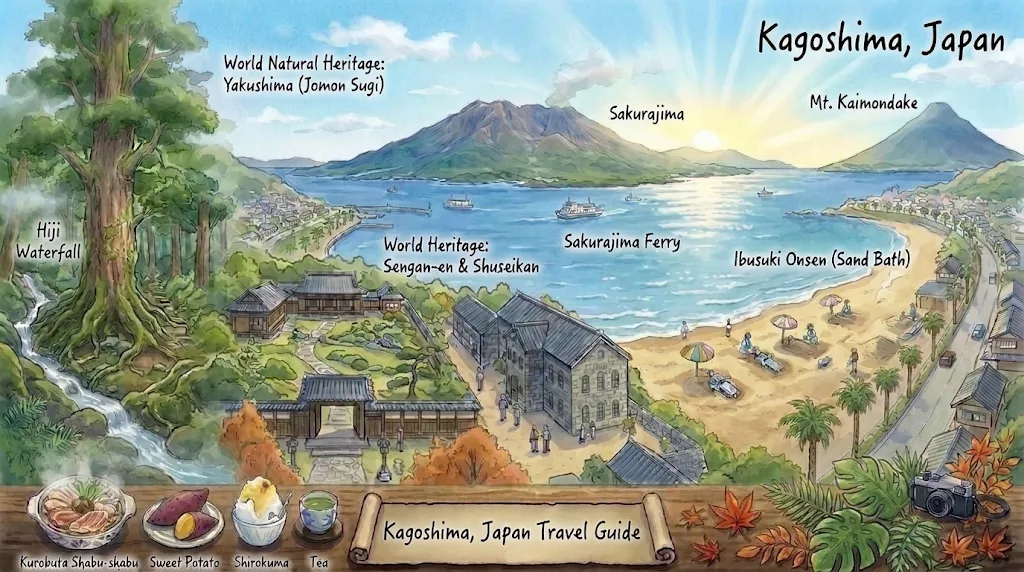
Located at the southern tip of Kyushu, Kagoshima Prefecture is defined by volcanic landscapes, samurai heritage, hot springs, and distant islands. Because Sakurajima, Ibusuki, and Yakushima each involve distinct transport modes and schedules, planning connections ahead makes a big difference. Here is a practical guide to key spots, getting around from Kagoshima City, and a sample 1-day itinerary.
⛴️ Getting Around Kagoshima
Most visitors base themselves around Kagoshima-Chuo Station or Tenmonkan in Kagoshima City, using streetcars, city buses, or rental cars. Major IC cards (ICOCA, Suica, PASMO, SUGOCA, nimoca, etc.) work on many local transit lines, though some ferries, sightseeing buses, or island routes require separate tickets or cash.
| Destination Area | Typical Route from Kagoshima City | Approx. Travel Time |
|---|---|---|
| Sakurajima | Streetcar or bus to Kagoshima Port, then Sakurajima Ferry (~15 mins) across Kinko Bay | 35–45 mins total |
| Sengan-en & Shuseikan | Local bus or sightseeing bus from Kagoshima-Chuo Station / Tenmonkan north along the coast | 25–40 mins |
| Ibusuki Onsen | JR Ibusuki Makurazaki Line (including the Ibusuki no Tamatebako sightseeing train) or highway bus south | 50–80 mins |
| Yakushima Island | High-speed jet foil (Toppy & Rocket) or ferry from Kagoshima Port, or short flight from Kagoshima Airport | 35–45 mins by air; ~1 hr 45 mins–2 hrs 30 mins by jet foil |
Practical note: Because Sakurajima is an active volcano, check volcanic alert levels and local wind/ash conditions before heading over, and allow extra buffer time for island buses or car ferries.
📍 Key Sights, Onsen & Local Food
🌋 Sakurajima: Volcano Views, Observatories & Footbaths
Set across Kinko Bay from Kagoshima City, Sakurajima is a prominent active stratovolcano known for lava fields, coastal viewpoints, and natural footbaths (ashiyu)[cite: 7].
Practical tip: While the ferry between Kagoshima Port and Sakurajima runs frequently (including late-night sailings), island sightseeing buses have set timetables. Bring a towel if using a footbath and check crater access restrictions before visiting viewpoints.
🏯 Sengan-en Garden & Shuseikan (Meiji Industrial Heritage)
Built in 1658 as a Shimazu clan villa, Sengan-en uses shakkei (borrowed scenery) framing Sakurajima and Kinko Bay, and sits alongside Shuseikan—recognized as part of the UNESCO World Heritage listing for Sites of Japan’s Meiji Industrial Revolution[cite: 7].
Practical tip: Separate tickets or combined passes may apply if you enter the main residence/villa rooms in addition to the garden. Check opening hours and seasonal events ahead of your visit.
🌲 Yakushima Island: Ancient Cedars & Mossy Forests
Designated a UNESCO Natural World Heritage site in 1993, Yakushima features steep mountain terrain, cedar forests (yakusugi) including Jomon Sugi, and mossy woodland trails[cite: 7].
Practical tip: Hiking to Jomon Sugi typically takes around 9–11 hours round-trip with an early-morning start, so plan an overnight stay on Yakushima rather than a day trip from Kagoshima City. Mountain weather is rainy and changeable year-round—pack rain gear, headlamps, hiking shoes, and enough food and water.
🏖️ Ibusuki Onsen: Geothermal Sand Baths (Sunamushi)
On the Satsuma Peninsula, Ibusuki is famous for sunamushi sand baths, where warm beach sand heated by geothermal activity covers the body while you wear a light robe[cite: 7].
Practical tip: Sand bath sessions are usually short (around 10–15 minutes) to prevent overheating, and operating hours can shift with tide levels, weather, or maintenance. Stay hydrated afterward and check whether a towel is included or rented on site.
🍠 What to Eat: Kurobuta Pork, Imo Shochu & Shirokuma
Local specialties include Kurobuta (Berkshire black pork, popular in shabu-shabu hot pot or tonkatsu), satsuma-imo (sweet potatoes) and imo shochu (sweet potato distilled spirit), and Shirokuma (shaved ice topped with condensed milk, fruit, and sweet beans)[cite: 7]. Popular pork restaurants around Kagoshima-Chuo and Tenmonkan often fill up in the evening, so reserving a table helps.
🗓️ Sample 1-Day Itinerary: Kagoshima City & Sakurajima
Yakushima is best visited over multiple days, while Ibusuki can make a separate half- or full-day trip. For a single day based in Kagoshima City, pairing Sengan-en with Sakurajima keeps travel times short:
- 09:00 – Sengan-en & Shuseikan: Head north from central Kagoshima to tour the garden and historical site in the morning[cite: 7].
- 11:30 – Lunch in Kagoshima City: Enjoy Kurobuta shabu-shabu or tonkatsu near Tenmonkan or Kagoshima-Chuo[cite: 7].
- 13:30 – Ferry to Sakurajima: Take the short ferry across Kinko Bay and ride a sightseeing bus or drive to scenic viewpoints and a footbath[cite: 7].
- 16:30 – Return Ferry & Shirokuma Break: Return to Kagoshima City and cool down with a Shirokuma shaved ice dessert[cite: 7].
- 18:30 – Dinner & Imo Shochu: Wrap up the day with local dishes and a glass of imo shochu[cite: 7].
Plan Your Stay & Tours in Kagoshima
Compare hotels near Kagoshima-Chuo or ryokan in Ibusuki, or check tours and rail tickets.