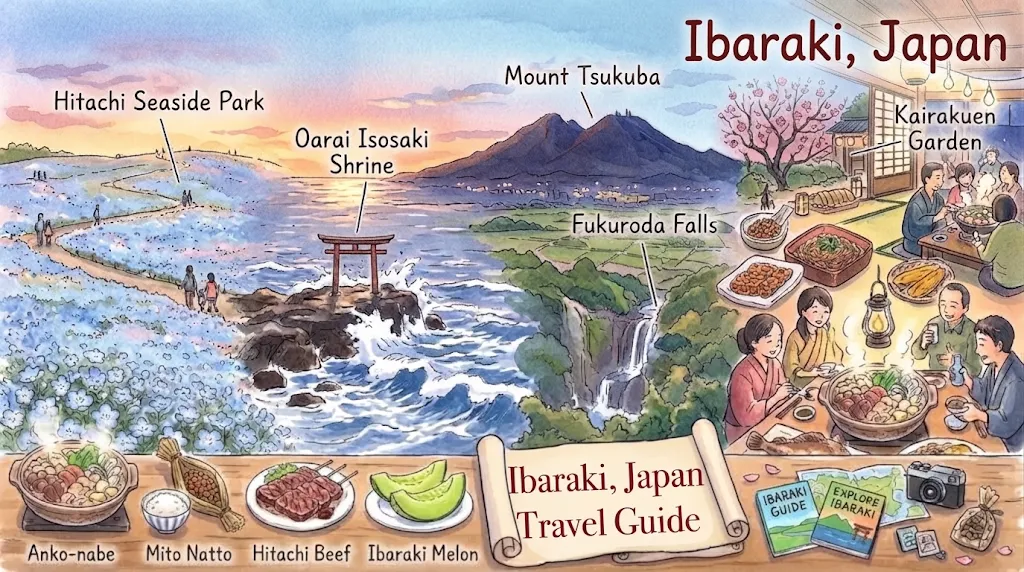
Located northeast of Tokyo, Ibaraki Prefecture can be reached in roughly 1.5 to 2.5 hours by train or highway bus, making it a practical day-trip or weekend destination. Beyond seasonal flower fields and coastal shrines, traveling smoothly around Ibaraki requires planning around local bus schedules, seasonal crowds, and regional specialties. Here is a practical guide to key spots, how to get around from Tokyo, and a sample 1-day itinerary.
🚆 Getting to Ibaraki from Tokyo
Ibaraki covers a wide area, so your departure station in Tokyo depends on which part of the prefecture you plan to visit first. Standard IC cards (Suica and PASMO) work on major JR and Tsukuba Express lines, though limited express trains require a separate reserved seat ticket.
| Destination Area | Main Route from Tokyo | Approx. Travel Time |
|---|---|---|
| Mito & Kairakuen | JR Joban Line Limited Express (Hitachi / Tokiwa) from Tokyo or Ueno Station to Mito Station | 70–85 mins |
| Hitachi Seaside Park | JR Limited Express to Katsuta Station (approx. 85 mins), then local bus to the park’s West Gate (15–20 mins) | 1 hr 45 mins–2 hrs |
| Oarai Coast & Shrine | JR Limited Express to Mito Station, transfer to Kashima Rinkai Railway Oarai-Kashima Line to Oarai Station (15 mins) | 1 hr 45 mins–2 hrs |
| Mount Tsukuba | Tsukuba Express (TX) Rapid from Akihabara Station to Tsukuba Station (45 mins), then Mount Tsukuba Shuttle Bus (40–50 mins) | 1 hr 40 mins–2 hrs |
Note on local connections: All seats on JR Joban Line limited express trains (Hitachi and Tokiwa) are reserved—purchase your limited express ticket at a ticket machine or online before boarding. For Mount Tsukuba, combined rail-and-bus passes sold at Tsukuba Express stations can save money on round-trip transit.
📍 Top Places to Visit & Local Food
🌸 Hitachi Seaside Park: Timing & Getting Around
Hitachi Seaside Park in Hitachinaka is famous for Miharashi Hill, which is covered with around 4.5 million nemophila in spring (typically late April to early May) and bright red kochia bushes in autumn (mid-October). Because peak bloom periods last only a couple of weeks, checking live bloom updates right before your trip is essential.
Practical tip: The park is very large, so walking between the entrance and Miharashi Hill takes extra time. You can use the park’s Seaside Train or rent a bicycle (note that bikes are not allowed inside certain pedestrian zones). From JR Katsuta Station, take the local bus toward the park—during peak flower weekends, lines for buses and entry tickets can get long, so arriving early in the morning helps.
🎍 Kairakuen Garden: Seasonal Highlights & Access
Established in 1842 by Tokugawa Nariaki in Mito, Kairakuen is counted among Japan’s Three Great Gardens. Its layout contrasts shaded bamboo and cedar groves with an open plum grove featuring roughly 3,000 plum trees across dozens of varieties, peaking around late February to mid-March during the Mito Plum Festival.
Practical tip: Kairakuen is located slightly west of central Mito. Buses run from JR Mito Station (North Exit), though traffic around the garden can slow down during plum season and cherry blossom season. Pair a visit here with nearby Kodokan or Senba Lake if you have a half-day in Mito.
⛰️ Mount Tsukuba: Hiking vs. Cable Car & Ropeway
Rising to 877 meters, Mount Tsukuba has two main peaks—Nantai (west) and Nyotai (east)—and is known for Tsukuba Mountain Shrine as well as wide views over the Kanto Plain on clear days.
Practical tip: You do not need to hike the entire mountain to reach the upper areas. A cable car runs from the shrine side up to the saddle between the peaks, while a ropeway operates from Tsutsujigaoka on the east side. Wear sturdy footwear even for short walks near the summit rocks, and check operating hours and maintenance schedules in advance, as weather or seasonal checks can affect lifts.
⛩️ Oarai Isosaki Shrine & Kamiiso-no-Torii
Oarai Isosaki Shrine overlooks the Pacific Ocean in Oarai Town, with its famous torii gate—Kamiiso-no-Torii—standing on coastal rocks just offshore.
Practical tip: Sunrise views framing the torii gate over the ocean are popular, especially in winter when the air is crisp. Keep a safe distance from the shoreline and wet rocks due to strong swells and slippery surfaces, and check local bus or Kashima Rinkai Railway timetables in advance, as frequency is lower than in central Tokyo.
🍲 What to Eat in Ibaraki: Ankou Nabe, Hitachi Beef & Melons
If you visit in late autumn or winter (roughly November to March), ankou nabe (anglerfish hot pot) is a signature coastal dish around Oarai and Kitaibaraki, prized for its rich broth made with anglerfish liver (ankimo). Year-round, look for Hitachi beef (a local brand of Japanese Black Wagyu) at steak or yakiniku restaurants, and pick up local melons in spring and early summer when Ibaraki’s harvest peaks.
🗓️ Sample 1-Day Itinerary from Tokyo (Coastal Route)
Because Mount Tsukuba and the Pacific coast sit on opposite sides of the prefecture, combining them in a single day using public transit is difficult. For first-time visitors, pairing Hitachi Seaside Park and Oarai along the Joban Line corridor is the most efficient day trip:
- 08:00 – Depart Tokyo / Ueno Station: Take the JR Joban Line Limited Express toward Katsuta Station (book seats in advance).
- 09:45 – Hitachi Seaside Park: Transfer at Katsuta Station to the local bus for the West Gate. Walk or ride the Seaside Train to Miharashi Hill and explore the seasonal gardens.
- 12:30 – Lunch at Nakaminato Fish Market: Take a short taxi or local bus south to Nakaminato Fish Market for fresh sushi, grilled seafood, or seasonal oysters.
- 14:30 – Oarai Isosaki Shrine & Kamiiso-no-Torii: Continue south into Oarai by taxi or local bus to visit the shrine grounds and coastal torii gate.
- 16:30 – Return via Oarai & Mito Stations: Ride the Kashima Rinkai Railway from Oarai Station to Mito Station (15 mins), then pick up local melon sweets or bento boxes at the station building.
- 17:30 – Limited Express Back to Tokyo: Board the evening Joban Line Limited Express from Mito Station, arriving back in central Tokyo around 19:00.
Plan Your Stay & Activities in Ibaraki
Compare hotels in Mito, Oarai, or around Tsukuba, or browse local tours and day passes.