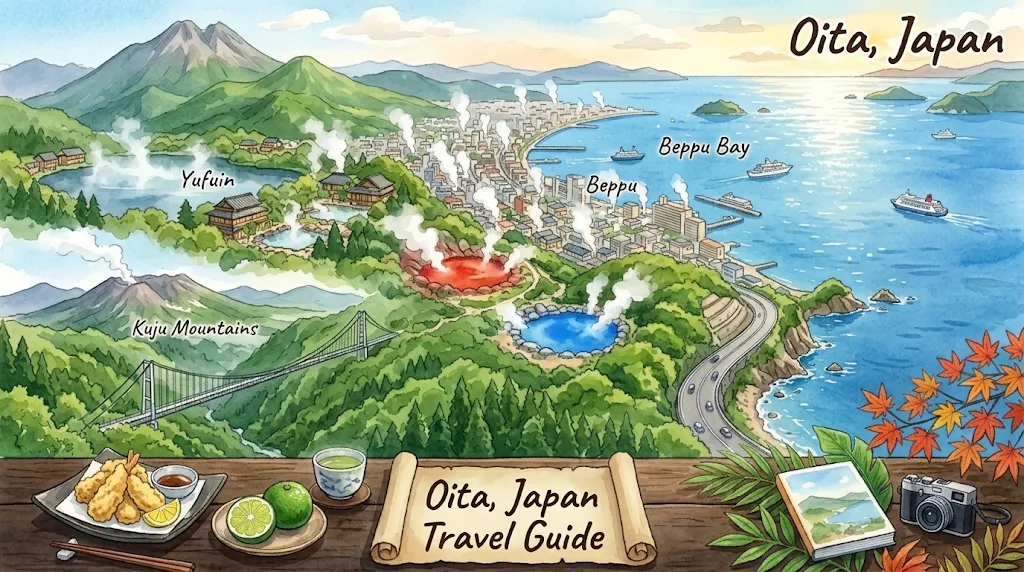
Located on eastern Kyushu, Oita Prefecture is famous across Japan for its hot springs (onsen), mountain scenery, historic shrines, and coastal seafood[cite: 9]. Because Beppu, Yufuin, inland mountain areas, and northern shrines are spread out, planning bus/train connections and seasonal opening hours helps make the most of your trip[cite: 9]. Here is a practical guide to key areas, getting around Oita, and a sample 1-day itinerary.
♨️ Getting Around Oita
Key entry points include Oita Station, Beppu Station, and Yufuin Station. Direct buses and JR trains connect Beppu and Yufuin, while mountain bridges, shrines, and rural valleys often have fewer buses, making timetables or a rental car important.
| Route / Destination | Typical Transit Option | Approx. Travel Time |
|---|---|---|
| Beppu ⇄ Yufuin | Direct highway/local bus between Beppu and Yufuin, or JR trains (Yufuin no Mori, Yufu, or local trains via Oita) | ~50 mins by direct bus; ~60–90 mins by train |
| Beppu Hells (Kannawa & Shibaseki) | Local bus or taxi from Beppu Station to Kannawa and Shibaseki hells | 15–30 mins from Beppu Station |
| Kokonoe Yume Suspension Bridge | Bus from Yufuin / Bungo-Nakamura area or rental car into the Kuju mountain area | ~25–50 mins depending on starting point |
| Usa Jingu & Kunisaki Peninsula | JR Nippo Main Line to Usa Station + local bus/taxi, or rental car across northern Oita | ~50–75 mins from Beppu/Oita to Usa area |
Practical note: Seats on JR’s popular Yufuin no Mori train require advance reservation, and local buses in mountain areas can run only a few times a day—always check return times before setting out.
📍 Key Sights, Onsen & Local Food
♨️ Beppu Onsen & the “Hells” (Jigoku Meguri)
Facing Beppu Bay, Beppu is famous for rising steam, hot spring baths, and the Jigoku Meguri (“Hell Tour”), where visitors view colorful geothermal hot springs—such as cobalt-blue Umi Jigoku and red Chinoike Jigoku[cite: 9].
Practical tip: The hells are for viewing rather than swimming or bathing, and they are split between the Kannawa cluster and the Shibaseki cluster a couple of kilometers away—allow roughly 1.5–2 hours and use buses or taxis between clusters.
🖼️ Yufuin: Lake Kinrin, Yunotsubo Street & Ryokan
Set below Mount Yufu, Yufuin offers a quieter resort atmosphere around Lake Kinrin (known for morning mist in cooler seasons), Yunotsubo Kaido’s shops and cafes, small museums, and hot spring ryokan[cite: 9].
Practical tip: Day-trip shops and food stalls along Yunotsubo Street get busy around midday and can close earlier than expected, while smaller eateries often do not take reservations for walk-ins. For a relaxed soak, consider staying overnight at a ryokan or local bathhouse.
⛩️ Usa Jingu & the Kunisaki Peninsula
In northern Oita, Usa Jingu is the head shrine of Hachiman shrines and closely tied to historic shinbutsu-shugo traditions, while the Kunisaki Peninsula preserves mountain temple heritage and stone cliff carvings (magaibutsu) such as Kumano Magaibutsu.
Practical tip: Trail sections and rural shrines in Kunisaki involve uneven forest or stone steps and limited public transit—wear sturdy shoes and check local bus routes or driving times ahead.
🌲 Hita & Kuju Mountains (Kokonoe Yume Suspension Bridge)
Western Oita features historic merchant streets in Hita (Mameda-machi) and highland scenery in the Kuju Mountains, including the Kokonoe Yume Suspension Bridge[cite: 9].
Practical tip: Kokonoe Yume Suspension Bridge operates daily (subject to weather restrictions), with hours typically 08:30–18:00 from July to October and 08:30–17:00 from November to June (ticket sales end 30 minutes before closing). In November, watch the 17:00 closing time so you don’t arrive too late in the afternoon.
🍗 What to Eat: Toriten, Karaage, Seki Fish & Kabosu
Oita specialties include toriten (tempura-battered fried chicken served with soy-mustard sauce), karaage (especially around Nakatsu), line-caught seki aji and seki saba (horse mackerel and mackerel from the Bungo Channel), and fragrant green kabosu citrus used on seafood, chicken, and drinks[cite: 9].
🗓️ Sample 1-Day Itinerary: Beppu Hells to Yufuin
Because Beppu and Yufuin sit relatively close together, combining a morning hell tour in Beppu with an afternoon walk in Yufuin is a classic 1-day route[cite: 9]:
- 08:30 – Beppu Hells (Jigoku Meguri): Start early in Kannawa and visit key hells before midday bus and tour crowds peak[cite: 9].
- 11:00 – Bus or Train to Yufuin: Head up to Yufuin by direct bus or train[cite: 9].
- 12:15 – Lunch & Yunotsubo Street: Try toriten or local noodles and browse shops and small museums along Yunotsubo Kaido[cite: 9].
- 14:30 – Lake Kinrin Walk & Onsen Break: Walk around Lake Kinrin and relax at a local hot spring bath or ryokan if staying overnight[cite: 9].
- 16:30+ – Return to Beppu / Oita or Stay Overnight: Catch a return bus/train or settle in for a ryokan dinner and evening soak[cite: 9].
Plan Your Stay & Passes in Oita
Compare ryokan in Yufuin or hot spring hotels in Beppu, and check tours or Kyushu rail passes.