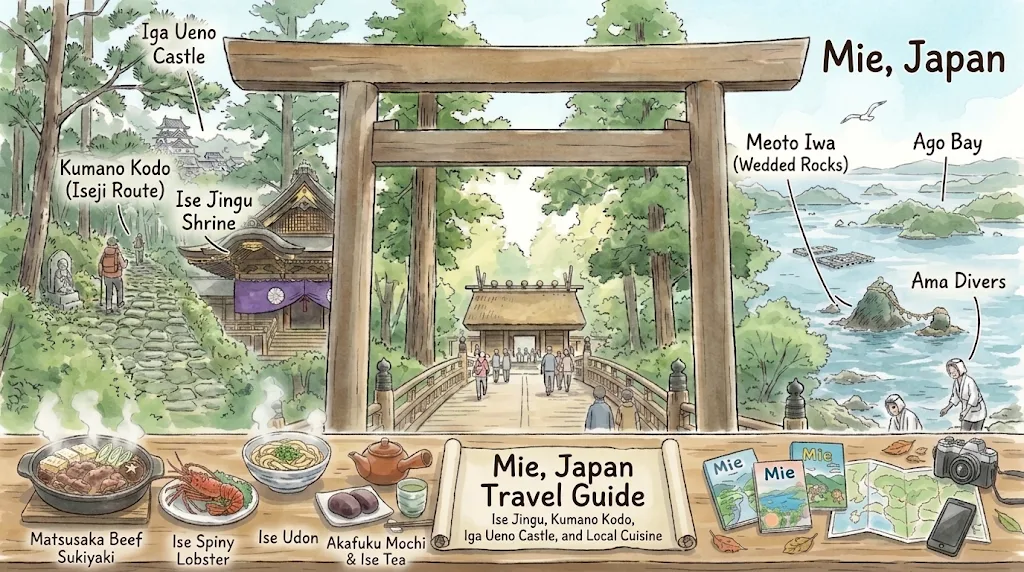
Along the eastern Kii Peninsula, Mie Prefecture brings together Ise Jingu, Kumano Kodo pilgrimage trails, ria-coast pearl and Ama heritage in Ise-Shima, ninja history in Iga, and regional specialties like Matsusaka beef and Ise udon. Because shrines, coastal bays, mountain paths, and western towns sit along different rail and bus lines, planning connections and seasonal hours ahead helps keep plans smooth[cite: 19]. Here is a practical guide to key spots, getting around Mie, and a sample 1-day itinerary.
🚆 Getting Around Mie
Kintetsu limited express and local trains connect Ise and Ise-Shima directly from Osaka, Kyoto, and Nagoya, while JR lines also serve parts of Mie. Because mountain trailheads and coastal bays are spread out, combining rail with local buses, taxis, or a rental car is often helpful.
| Destination Area | Typical Transit Route | Approx. Travel Time |
|---|---|---|
| Ise Jingu (Geku & Naiku) | Kintetsu / JR to Iseshi Station (near Geku), then local bus or taxi/walk between Geku and Naiku (~15–20 mins by bus) | ~15–25 mins between Geku & Naiku |
| Ise-Shima Coast (Toba & Ago Bay) | Kintetsu Shima Line south from Ise toward Toba or Kashikojima + local bus/boat/car | ~15–50 mins from Ise (varies by stop) |
| Iga (Iga Ueno Castle & Ninja Museum) | Kintetsu line toward Iga-Kambe + Iga Railway to Uenoshi Station, or rental car/bus | ~1.5–2+ hrs from Ise-Shima area (varies by route) |
| Kumano Kodo Iseji Trailheads | JR Kisei Main Line south along Mie’s coast toward Owase / Kumano + local bus/taxi or rental car | ~1.5–2.5+ hrs south from Ise |
Practical note: Buses along southern Kumano Kodo trailheads and rural coastal roads run less frequently than trains near Ise—always check return bus times before starting a hike.
📍 Key Sights, Trails, Coast & Local Food
🌲 Kumano Kodo Iseji Route (Stone Paths & Coast)
Part of the UNESCO World Heritage listing for Sacred Sites and Pilgrimage Routes in the Kii Mountain Range, Mie’s Iseji route connects Ise toward Kumano with stone-paved passes (ishidatami) such as Magose-toge and Matsumoto-toge, coastal gravel along Shichiri-mihama, and Hananoiwaya[cite: 19].
Practical tip: Stone-paved mountain paths can be slick when wet or mossy—wear sturdy, grippy hiking shoes, bring rain gear and water, and plan point-to-point transport or return routes carefully rather than assuming loop paths.
⛩️ Ise Jingu (Geku & Naiku) & Shikinen Sengu
Encompassing 125 shrines centered on the Geku (Outer Shrine) and Naiku (Inner Shrine, entered across Uji Bridge over the Isuzu River), Ise Jingu is renowned for its 20-year rebuilding cycle (Shikinen Sengu)[cite: 19].
Practical tip: Opening and closing hours shift with the seasons (typically starting at 05:00 in warmer months and 06:00 in winter, closing around 17:00–18:00), and visiting Geku before Naiku is traditional. Photography is restricted in inner sanctuary areas—follow signs and keep voices low along forested paths.
🦪 Ise-Shima Coast, Pearl History & Ama Divers
South of Ise, the Ise-Shima coastline and Ago Bay are tied to cultured pearl history and traditional Ama (female free divers) who harvest seafood in coastal waters and host visitors at Amagoya huts[cite: 19].
Practical tip: Meals and visits at Amagoya huts typically require advance reservations and have set seating/operating hours—check booking details and local bus/boat connections ahead.
🥷 Iga Ninja Heritage & Iga Ueno Castle
In western Mie, Iga features the Iga-ryu Ninja Museum (with trick doors, hidden compartments, and demonstrations) alongside Iga Ueno Castle and its tall stone walls[cite: 19].
Practical tip: Check museum and castle opening hours, demonstration times, and closing days before traveling to Iga, as train transfers on local lines can take extra time.
🥩 What to Eat: Matsusaka Beef, Ise Udon & Akafuku Mochi
Mie specialties include marbled Matsusaka beef (served as sukiyaki, yakiniku, or steak), Ise ebi (spiny lobster), Ise udon (thick, soft noodles tossed in a rich dark soy-sauce broth rather than floating in a large bowl of soup), and Akafuku mochi (soft mochi topped with rippled sweet red bean paste)[cite: 19]. Because Akafuku mochi is a fresh sweet without preservatives, check its short expiration date if taking boxes home.
🗓️ Sample 1-Day Itinerary: Ise Jingu & Ise-Shima Coast
Kumano Kodo trail hikes and Iga each fit best on a separate day. For a 1-day trip around Ise, visiting the shrines in the morning and heading toward the Ise-Shima coast in the afternoon is a smooth route[cite: 19]:
- 08:30 – Ise Jingu (Geku then Naiku): Start at Geku and head to Naiku across Uji Bridge while paths are calm[cite: 19].
- 11:30 – Lunch & Akafuku Break Around Ise: Try Ise udon or local seafood and pick up Akafuku mochi[cite: 19].
- 13:30 – Head Toward Ise-Shima (Toba or Ago Bay): Ride the Kintetsu train or drive south toward the coast[cite: 19].
- 14:30 – Coastal Views & Pearl/Ama Heritage: Enjoy bayside scenery, pearl exhibits, or coastal stops before dusk[cite: 19].
- 18:00+ – Dinner (Matsusaka Beef or Seafood): Have dinner locally or head back toward your hotel[cite: 19].
Plan Your Stay & Passes in Mie
Compare ryokan near Ise Jingu or coastal resorts in Toba and Ago Bay, and check Kintetsu rail passes or tours[cite: 19].