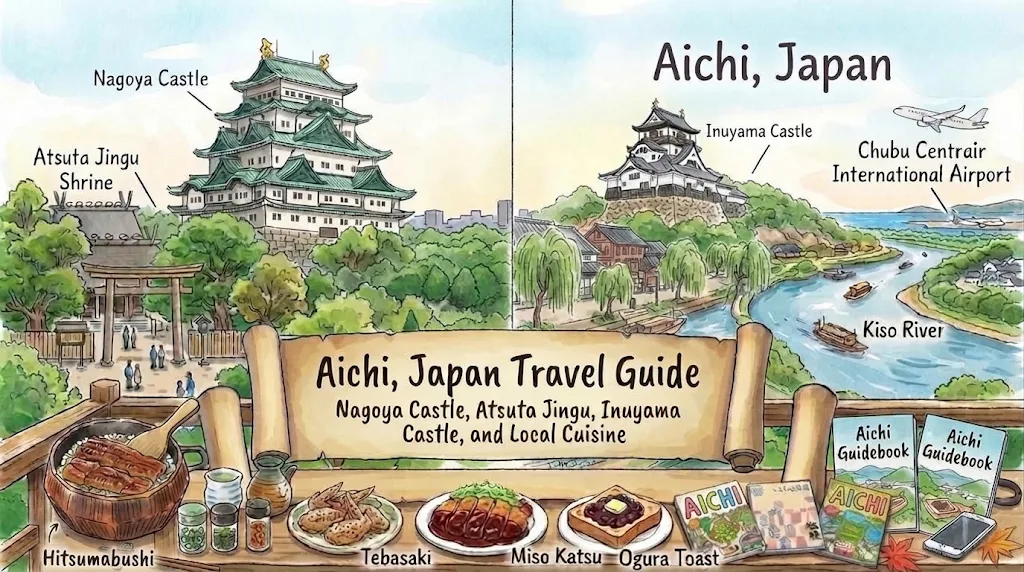
Positioned at the crossroads of central Japan, Aichi Prefecture combines samurai castles and sacred shrines with Ghibli Park, industrial museums, and bold local dishes known as Nagoya Meshi. Because tickets, castle access rules, and train/bus lines vary across spots, checking schedules ahead helps keep plans smooth[cite: 18]. Here is a practical guide to key sights, getting around Aichi, and a sample 1-day itinerary.
🚆 Getting Around Aichi
Nagoya Station (served by the Shinkansen, JR lines, Meitetsu, Kintetsu, and subway) is the main hub for exploring Aichi, while Chubu Centrair International Airport (NGO) connects south of the city by Meitetsu rail. Major IC cards work on most urban trains, subways, and buses.
| Destination Area | Typical Route from Nagoya Station | Approx. Travel Time |
|---|---|---|
| Nagoya Castle | Nagoya Subway Meijo Line to Shiyakusho Station (~10 mins), then ~5–10 min walk | 20–25 mins |
| Atsuta Jingu Shrine | Subway Meijo Line to Atsuta Jingu Nishi / Temmacho, or Meitetsu Line to Jingu-mae Station, then walk | ~20–30 mins |
| Inuyama Castle | Meitetsu Inuyama Line from Meitetsu Nagoya Station to Inuyama or Inuyamayuen Station (~30–40 mins), then ~15–20 min walk | ~50–60 mins total |
| Ghibli Park (Nagakute) | Subway Higashiyama Line to Fujigaoka Station + Linimo maglev line to Ai-Chikyuhaku Kinen Koen Station, or direct bus | ~45–60 mins |
Practical note: Chubu Centrair International Airport is about 30 minutes from Nagoya Station on the Meitetsu Mu-Sky limited express (which requires a separate special car ticket in addition to the base fare).
📍 Key Sights, Heritage, Parks & Local Food
🏯 Nagoya Castle, Honmaru Palace & Inuyama Castle
Built from 1612 under Tokugawa Ieyasu, Nagoya Castle features kinshachi roof ornaments and the restored Honmaru Palace, while nearby Inuyama Castle preserves one of Japan’s twelve original keeps above the Kiso River[cite: 18].
Practical tip: Check current building entry rules and last-admission times at Nagoya Castle before visiting, and remove outdoor shoes inside Honmaru Palace and original castle keeps. At Inuyama Castle, wooden stairs to the top are steep—wear comfortable, easy-to-slip-off shoes.
⛩️ Atsuta Jingu Shrine & Treasure Hall
Set in a wooded grove in southern Nagoya, Atsuta Jingu is tied to the Kusanagi-no-Tsurugi sacred sword and features shaded paths and a Treasure Hall[cite: 18].
Practical tip: The shrine grounds are open for walks and prayer, while the Treasure Hall and museum exhibits have set hours and periodic closing days—check schedules ahead if you plan to view historical items.
🌳 Ghibli Park & Industrial Heritage Museums
In Nagakute’s Expo 2005 Commemorative Park, Ghibli Park blends themed spaces inspired by Studio Ghibli films into park woodlands, while Nagoya’s Toyota Commemorative Museum of Industry and Technology highlights textile and automotive history[cite: 18].
Practical tip: Ghibli Park requires advance date- and area-specific tickets that sell out ahead of time, with park walking distances between areas—check ticket rules, closed days, and transit times carefully before booking.
🍛 What to Eat: Hitsumabushi, Miso Katsu, Tebasaki & Ogura Toast
Nagoya Meshi highlights include hitsumabushi (chopped grilled eel served in four stages: plain, with condiments like wasabi and green onions, as ochazuke with dashi broth, and your favorite way), miso katsu and miso nikomi udon (made with savory red Hatcho miso), peppery tebasaki chicken wings, and ogura toast during morning café hours[cite: 18]. Popular hitsumabushi spots often draw lines or sell out at dinner, so going earlier or booking helps.
🗓️ Sample 1-Day Itinerary: Nagoya Castle, Atsuta Jingu & Nagoya Meshi
Ghibli Park or Inuyama Castle can each anchor a full or half day on their own. For a 1-day itinerary within Nagoya City, pairing Nagoya Castle with Atsuta Jingu and local food keeps travel simple[cite: 18]:
- 08:30 – Morning Café (Ogura Toast): Start with thick toast, red bean paste, and coffee at a local Nagoya café[cite: 18].
- 09:30 – Nagoya Castle & Honmaru Palace: Head to Nagoya Castle in the morning to explore the grounds and palace interiors[cite: 18].
- 12:15 – Miso Katsu or Miso Nikomi Udon Lunch: Try a Hatcho-miso specialty in central Nagoya[cite: 18].
- 14:00 – Atsuta Jingu Shrine: Ride the subway south to walk through the shaded shrine grounds[cite: 18].
- 18:00 – Dinner (Hitsumabushi & Tebasaki): Wrap up the day with charcoal-grilled eel (hitsumabushi) and tebasaki chicken wings[cite: 18].
Plan Your Stay & Passes in Aichi
Compare hotels near Nagoya Station or Chubu Centrair Airport, and check rail passes, airport transfers, or tours.