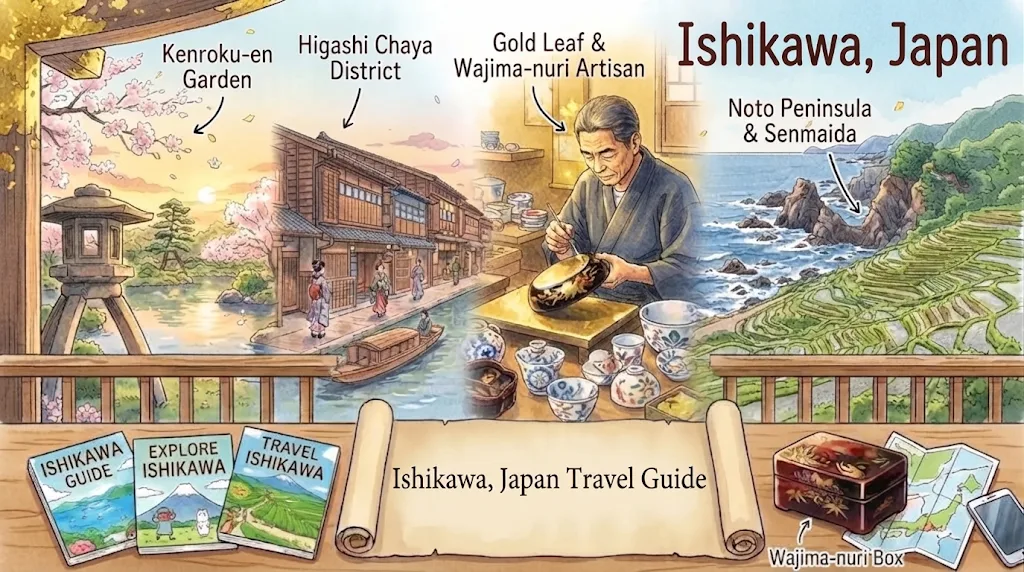
Facing the Sea of Japan on the Hokuriku coast, Ishikawa Prefecture is known for Kanazawa’s samurai and chaya districts, traditional crafts, hot springs, and coastal scenery. Planning around Shinkansen reservations, local bus routes, and seasonal conditions helps make the most of your trip. Here is a practical guide to key areas, getting there from Tokyo, and a sample 1-day itinerary.
🚄 Getting to Ishikawa from Tokyo
The Hokuriku Shinkansen connects Tokyo Station directly to Kanazawa Station, making Kanazawa a popular weekend trip or stopover along the Sea of Japan coast. Reserved seat booking is recommended during peak travel periods such as cherry blossom season, Golden Week, Obon, and year-end holidays.
| Destination Area | Main Route from Tokyo | Approx. Travel Time |
|---|---|---|
| Kanazawa City | Hokuriku Shinkansen (Kagayaki / Hakutaka) from Tokyo Station to Kanazawa Station | 2 hrs 30 mins–3 hrs |
| Kaga Onsen | Hokuriku Shinkansen to Kagaonsen Station, then local bus or taxi to Yamashiro, Yamanaka, or Katayamazu | 3 hrs–3 hrs 30 mins |
| Noto Peninsula | Hokuriku Shinkansen to Kanazawa Station, then rental car, tour, or express/local bus north into Noto | 4 hrs+ (varies by stop) |
Practical note: While Kanazawa is easy to explore by loop bus, walk, or taxi, public transit across the Noto Peninsula is less frequent. Always check the latest road, bus, and rail schedules before traveling into northern Ishikawa.
📍 Key Sights, Crafts & Local Food
🏯 Kanazawa & Kenroku-en Garden
Developed as the castle town of the Maeda clan in the Edo period, Kanazawa is home to Kenroku-en, one of Japan’s Three Great Gardens, located right next to Kanazawa Castle Park.
Practical tip: Seasonal highlights include yukitsuri (cone-shaped rope supports protecting pine branches from snow, typically installed from November into spring), cherry blossoms in spring, and autumn foliage. Garden admission hours vary by season, and going earlier in the morning helps avoid peak midday crowds.
✨ Chaya Districts, Gold Leaf & Traditional Crafts
Historic districts such as Higashi Chaya and Kazuemachi preserve traditional wooden architecture, while Ishikawa is famous for gold leaf (kinpaku), Kutani-yaki porcelain, and Wajima-nuri lacquerware.
Practical tip: Many teahouses, craft shops, and gold-leaf workshops close around 17:00, and hands-on sessions often require advance reservations. Treat traditional lacquerware and ceramics gently—avoid dishwashers, microwaves, and abrupt temperature changes.
🌊 Noto Peninsula & Senmaida Terraced Fields
Extending into the Sea of Japan, the Noto Peninsula is known for its rugged coastline and Shiroyone Senmaida, a hillside of small terraced rice paddies overlooking the water.
Practical tip: Distances in Noto are long and winter weather along the Sea of Japan can be windy and cold. Check current local access, viewing areas, and transit options in advance, and plan daytime driving if renting a car.
♨️ Kaga Onsen Hot Spring Towns
South of Kanazawa, the Kaga Onsen area includes historic hot spring towns such as Yamashiro, Yamanaka, and Katayamazu, offering traditional ryokan inns and public bathhouses.
Practical tip: If you plan to stay at a ryokan with dinner (kaiseki) included, let the property know your arrival time and any dietary restrictions well ahead of your stay.
🍣 What to Eat: Omicho Market, Seafood & Sake
Kanazawa’s Omicho Market is a go-to spot for fresh Sea of Japan seafood—such as sweet shrimp, yellowtail, sushi bowls, and winter snow crab—alongside local sake and sweets. Most market stalls open in the morning and many close by mid-afternoon, so go for breakfast or an early lunch.
🗓️ Sample 1-Day Itinerary: Classic Kanazawa Walk
If you have one day in Ishikawa based in Kanazawa, focusing on central sights keeps walking and bus transfers simple:
- 09:00 – Kenroku-en & Kanazawa Castle Park: Start early at Kenroku-en for quieter paths, then walk across to Kanazawa Castle Park.
- 11:30 – Seafood Lunch at Omicho Market: Head to Omicho Market for a seafood rice bowl (kaisen-don) or sushi before stalls wind down.
- 13:30 – Higashi Chaya District & Craft Shops: Take a bus or walk to Higashi Chaya to explore historic streets, tea shops, and gold-leaf or craft stores.
- 16:00 – Relax with Matcha or Local Sweets: Take a break at a traditional cafe before evening crowds build.
- 18:00 – Dinner in Kanazawa: Enjoy local seafood, Kanazawa oden, or regional specialties around the chaya areas or near Kanazawa Station.
Plan Your Stay & Experiences in Ishikawa
Compare hotels and ryokan in Kanazawa or Kaga Onsen, or check local passes and craft tours.