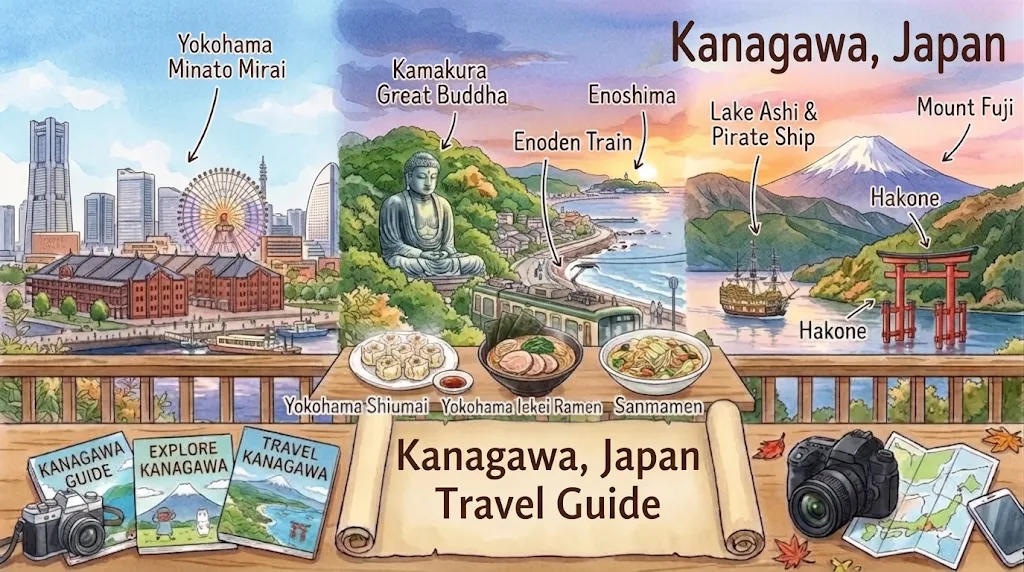
South of Tokyo, Kanagawa Prefecture brings together waterfront cityscapes in Yokohama, temples and coastal tracks in Kamakura and Enoshima, hot springs and mountain views in Hakone, and diverse local foods. Because popular coastal railways get busy and mountain transport in Hakone depends on weather and maintenance schedules, checking routes and operating notices ahead helps keep plans smooth. Here is a practical guide to key spots, getting around Kanagawa, and a sample 1-day itinerary[cite: 20].
🚆 Getting Around Kanagawa
Yokohama Station is a major rail hub connecting Tokyo, Shonan/Kamakura, and western Kanagawa. In Hakone, travelers typically combine mountain trains, cable cars, ropeways, cruises, and buses—often using a pass such as the Hakone Freepass—while checking for any seasonal maintenance or weather suspensions.
| Destination Area | Typical Transit Route | Approx. Travel Time |
|---|---|---|
| Minato Mirai & Yokohama Chinatown | Minatomirai Line from Yokohama Station to Minatomirai (~3 mins) or Motomachi-Chukagai (~10 mins), or JR Negishi Line / bus | ~3–15 mins from Yokohama Station |
| Kamakura & Enoshima | JR Yokosuka / Shonan-Shinjuku Line to Kamakura Station (~25–35 mins from Yokohama), then Enoshima Electric Railway (Enoden) toward Enoshima | ~25–35 mins to Kamakura; ~25–30 mins on Enoden to Enoshima |
| Hakone (Yumoto, Owakudani & Lake Ashi) | Odakyu line (from Shinjuku) or JR/Shinkansen to Odawara, then Hakone Tozan train/bus, cable car, ropeway, and sightseeing cruise | ~1.5–2.5+ hrs from Tokyo/Yokohama (varies by route & transfers) |
Practical note: If riding Odakyu’s Romancecar limited express to Hakone, a limited express ticket is required in addition to base/pass fare, and ropeway/cruise/bus schedules can adjust in bad weather or inspection periods.
📍 Key Sights, Coast, Onsen & Local Food
🚢 Yokohama: Minato Mirai, Chinatown, Yamashita Park & Yamate
Opened to foreign trade in 1859, Yokohama blends waterfront landmarks in Minato Mirai 21 (including the Red Brick Warehouse and Ferris wheel) with Yokohama Chinatown, Yamashita Park, and historic Western-style homes in Yamate[cite: 20].
Practical tip: Yokohama’s waterfront and Chinatown involve plenty of walking across connected piers and streets—wear comfortable shoes, check museum/facility hours ahead, and expect busy crowds in Chinatown on weekends and holidays.
🗡️ Kamakura: Kotoku-in Great Buddha, Tsurugaoka Hachimangu & Hokokuji
A former samurai capital, Kamakura features the outdoor bronze Great Buddha at Kotoku-in, Tsurugaoka Hachimangu Shrine along Komachi-dori, bamboo paths at Hokokuji Temple, and the Enoden coastal railway[cite: 20].
Practical tip: Komachi-dori and Enoden trains get crowded during midday and weekends—starting early helps, and check temple/garden closing times (such as Hokokuji’s bamboo grove and tea service) before going.
♨️ Hakone: Owakudani, Lake Ashi, Hakone Shrine & Onsen
In the mountains of western Kanagawa, Hakone is famous for hot springs, Owakudani volcanic vents, Lake Ashi cruises, Hakone Shrine, and views toward Mount Fuji when skies are clear[cite: 20].
Practical tip: Check Hakone Ropeway and Owakudani operating notices before your trip—scheduled inspection periods or high winds/volcanic gas can temporarily close sections and shift travelers onto replacement buses. Mountain weather is cooler than in Tokyo, so bring a layer and check last bus/train return times.
🏄 Enoshima & Shonan Coast
Along the coast, Shonan and Enoshima offer beach culture, shrine steps, sea views from Enoshima Sea Candle, and coastal rail scenery including the area near Kamakurakokomae station[cite: 20].
Practical tip: Popular coastal viewpoints and railway crossings draw heavy pedestrian traffic—never step into roadways or onto train tracks for photos, and follow local crowd/safety signs.
🍛 What to Eat: Chinatown Dishes, Shirasu-don, Navy Curry & Misaki Maguro
Kanagawa specialties include steamed buns, dumplings, and Cantonese/Chinese dishes in Yokohama Chinatown, shirasu-don (rice topped with local whitebait, served cooked/boiled or raw when fresh in Shonan/Kamakura), Yokosuka Navy Curry, and maguro (tuna) associated with the Miura/Misaki coast[cite: 20]. Raw nama-shirasu depends on daily catch and freshness, so check with the restaurant if unsure.
🗓️ Sample 1-Day Itinerary: Kamakura, Enoshima & Coastal Views
Hakone works best as a full day or overnight stay of its own, while a 1-day trip along the Kamakura–Enoshima coast lets you combine temples, local food, and ocean scenery easily:
- 08:30 – Tsurugaoka Hachimangu & Kamakura Sights: Start early in Kamakura before midday crowds build, then visit the Great Buddha at Kotoku-in[cite: 20].
- 12:00 – Lunch in Kamakura or Enoshima: Try shirasu-don or local noodles/cafes[cite: 20].
- 13:30 – Ride the Enoden Along the Coast: Take the Enoden train past coastal neighborhoods toward Enoshima[cite: 20].
- 14:30 – Enoshima Walk & Sea Views: Explore the island shrines, paths, or observation tower before sunset[cite: 20].
- 17:30+ – Head Toward Yokohama or Return: Continue to Yokohama for evening waterfront views and Chinatown dining or head back toward Tokyo[cite: 20].
Plan Your Stay & Passes in Kanagawa
Compare ryokan in Hakone, hotels in Yokohama, or stays near Kamakura, and check passes, day tours, or attraction tickets[cite: 20].