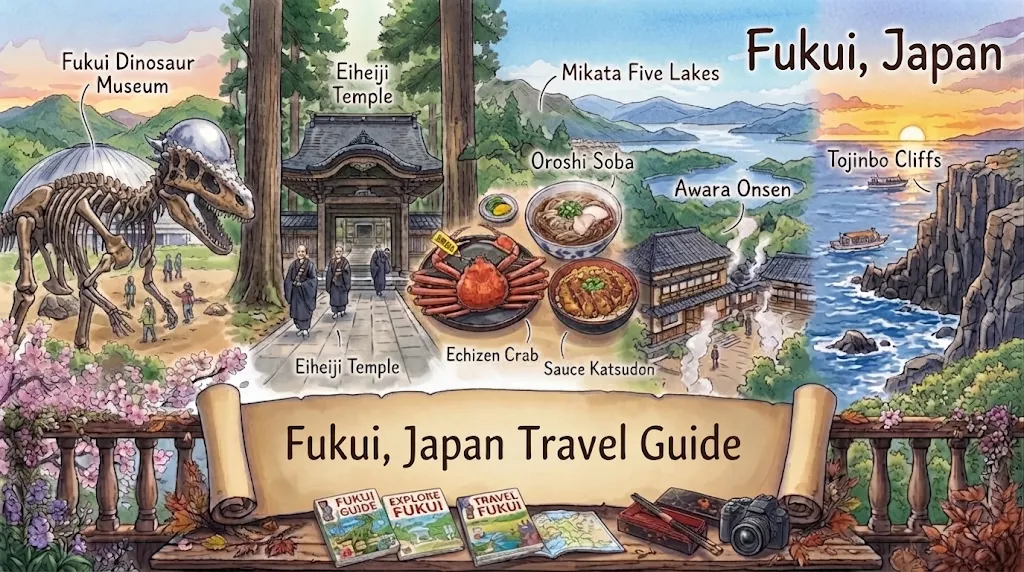
Facing the Sea of Japan along the Hokuriku route, Fukui Prefecture brings together dinosaur exhibits in Katsuyama, Zen monastery heritage at Eiheiji, dramatic coastal cliffs at Tojinbo, hot springs in Awara, and local specialties like Echizen crab. Because mountain temples, coastal cliffs, and museum tickets involve specific schedules and booking rules, planning ahead helps keep travel smooth[cite: 24]. Here is a practical guide to key spots, getting around Fukui, and a sample 1-day itinerary[cite: 24].
🚆 Getting Around Fukui
Fukui Station and Awara-Onsen Station are served by the Hokuriku Shinkansen, while local lines (such as Echizen Railway), route buses, and rental cars connect sights in Katsuyama, Eiheiji, and along the coast.
| Destination Area | Typical Transit Route | Approx. Travel Time |
|---|---|---|
| Daihonzan Eiheiji Temple | Keifuku bus from Fukui Station toward Eiheiji, or Echizen Railway + bus/taxi | ~30–45 mins from Fukui Station |
| Fukui Prefectural Dinosaur Museum (Katsuyama) | Echizen Railway Katsuyama-Eiheiji Line from Fukui Station to Katsuyama Station (~50–60 mins) + bus/taxi (~15–20 mins) | ~1 hr 15 mins–1 hr 30 mins total |
| Tojinbo Cliffs | Route bus from Awara-Onsen Station or Mikuni area toward Tojinbo, or rental car/taxi | ~25–45 mins from Awara-Onsen area |
| Awara Onsen | Bus or taxi from Hokuriku Shinkansen Awara-Onsen Station (~10–15 mins) | ~15–25 mins from Awara-Onsen Station |
Practical note: Buses between Katsuyama Station and the Dinosaur Museum or along coastal routes run on limited schedules—check connection times in advance, especially on return legs.
📍 Key Sights, Coast, Onsen & Local Food
🦖 Katsuyama & Fukui Prefectural Dinosaur Museum
In Katsuyama, the Fukui Prefectural Dinosaur Museum showcases full-scale skeletons, displays, and regional paleontology alongside seasonal excavation programs in the surrounding area[cite: 24].
Practical tip: Advance timed-entry tickets are commonly required or strongly recommended, and the museum has set closing/maintenance days—check reservation rules and hours before traveling to Katsuyama.
🧘 Daihonzan Eiheiji Temple (Zen Monastery)
Founded in 1244 by Zen master Dogen in a forested mountain valley, Daihonzan Eiheiji is an active Soto Zen training monastery with connected halls, corridors, and meditation/visitor programs[cite: 24].
Practical tip: Eiheiji is an active monastery rather than a casual tourist park—keep voices low, follow visitor routes, remove outdoor shoes inside buildings (wear warm/thick socks, as wooden corridors can be chilly in cooler months), and check zazen or visiting hours ahead.
🌊 Tojinbo Cliffs & Echizen Coast
Along the Echizen Coast, Tojinbo features columnar rock formations meeting the Sea of Japan, with coastal walking paths and boat rides[cite: 24].
Practical tip: Cliff edges have natural drops, uneven rock surfaces, and strong coastal winds or slick spots when wet—stay well back from ledges and breaking waves, wear sturdy shoes, and check sightseeing boat operating times.
♨️ Awara Onsen & Wakasa (Mikata Five Lakes)
Northern Fukui’s Awara Onsen offers hot spring ryokan and baths, while southern Wakasa features the Mikata Five Lakes and traditional Wakasa-nuri lacquerware[cite: 24].
Practical tip: Wakasa and northern Fukui sit far apart within the prefecture—check rail/car connections and ryokan day-bath or check-in times in advance.
🦀 What to Eat: Echizen Crab, Sauce Katsudon & Oroshi Soba
Fukui specialties include Echizen gani (snow crab, harvested primarily during the colder season from roughly November through March), sauce katsudon (breaded pork cutlet coated in savory sauce over rice), and Echizen oroshi soba (buckwheat noodles served with grated daikon radish and broth)[cite: 24]. Seasonal crab availability and prices vary by month and catch, so check local seasons when planning a crab meal.
🗓️ Sample 1-Day Itinerary: Eiheiji Temple & Central Fukui
The Dinosaur Museum in Katsuyama or Tojinbo/Awara can each take a full day on its own. For a 1-day trip based in Fukui City, combining Eiheiji Temple in the morning with local noodles and city sights in the afternoon is straightforward[cite: 24]:
- 08:30 – Ride to Eiheiji Temple: Take a bus or train/bus connection from Fukui City up to Eiheiji[cite: 24].
- 09:30 – Daihonzan Eiheiji Visit: Walk the temple halls and cedar-lined grounds quietly in the morning[cite: 24].
- 12:30 – Return & Oroshi Soba / Sauce Katsudon Lunch: Head back toward Fukui City for Echizen oroshi soba or sauce katsudon[cite: 24].
- 14:30 – Central Fukui Walk & Local Sweets: Explore shops, cafes, or local spots around Fukui Station[cite: 24].
- 18:00 – Dinner in Fukui: Enjoy regional seafood or meat dishes (including Echizen crab in season)[cite: 24].
Plan Your Stay & Passes in Fukui
Compare ryokan in Awara Onsen or hotels near Fukui Station, and check Hokuriku rail passes or tours[cite: 24].