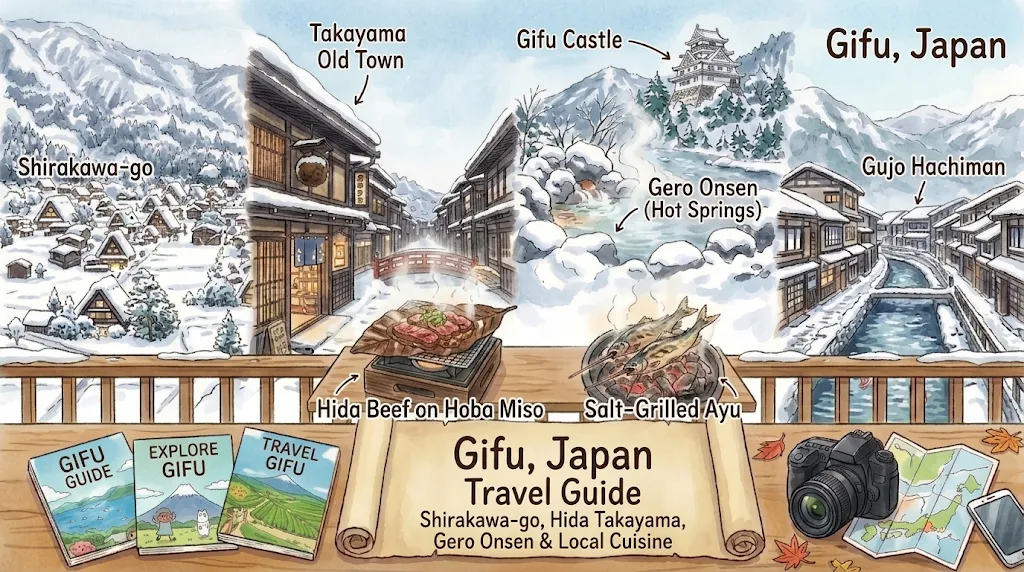
Spanning central Japan from the Hida mountains to river valleys in the south, Gifu Prefecture brings together Shirakawa-go’s thatched farmhouses, Hida Takayama’s merchant streets, Gero Onsen, Gujo Hachiman, and local specialties like Hida beef. Because mountain buses, express trains, and seasonal weather can affect timing—especially in winter or busy seasons—checking schedules ahead helps keep plans smooth. Here is a practical guide to key spots, getting around Gifu, and a sample 1-day itinerary[cite: 21].
🚆 Getting Around Gifu
JR Limited Express Hida trains connect Nagoya with Gero and Takayama along the Takayama Main Line, while highway and local buses link Takayama with Shirakawa-go and Kanazawa. Mountain roads and winter snow can cause delays, so build in buffer time.
| Destination Area | Typical Transit Route | Approx. Travel Time |
|---|---|---|
| Hida Takayama (Old Town) | JR Limited Express Hida from Nagoya (~2.5 hrs) or highway bus from Nagoya/Kanazawa/Matsumoto, then walk from Takayama Station | ~10–15 min walk from Takayama Station |
| Shirakawa-go (Ogimachi) | Highway bus from Takayama Nohi Bus Center (~50 mins) or Kanazawa Station (~1 hr 15 mins), or rental car/tour | ~50–75 mins by highway bus |
| Gero Onsen | JR Limited Express Hida from Nagoya to Gero Station (~1.5–2 hrs), then walk/shuttle/bus into town | ~1 hr 30 mins–2 hrs from Nagoya |
| Gujo Hachiman | Highway bus from Gifu/Nagoya toward Gujo Hachiman, Nagaragawa Railway train, or rental car | ~1–1.5+ hrs (varies by departure & mode) |
Practical note: Many highway bus services to Shirakawa-go require advance seat reservations, and snow or road congestion can delay buses—book return seats early and allow extra margin in winter.
📍 Key Sights, Onsen, Towns & Local Food
❄️ Shirakawa-go & Gassho-zukuri Farmhouses
Inscribed as a UNESCO World Heritage site in 1995, Shirakawa-go is famous for steep thatched gassho-zukuri farmhouses built for heavy snow, active community life, and seasonal views from summer greenery to winter snow[cite: 21].
Practical tip: Many farmhouses are private homes and active workplaces—stay on designated paths, respect “no entry” signs, and check winter illumination rules/reservations well in advance if visiting in cold months.
🏮 Hida Takayama: Sanmachi Suji & Morning Markets
In northern Gifu, Hida Takayama preserves wooden merchant streets along Sanmachi Suji, sake breweries marked by sugidama cedar balls, and morning markets along the Miyagawa River[cite: 21].
Practical tip: Morning markets operate in the morning hours (and can vary by season or weather), while many shops and sake tastings close by late afternoon—plan morning walks and afternoon stops accordingly.
♨️ Gero Onsen & Yumeguri Tegata Bath Pass
Along the Hida River, Gero Onsen is known for smooth, alkaline hot spring waters, footbaths around town, and ryokan inns[cite: 21].
Practical tip: If using a Yumeguri Tegata multi-bath pass, each participating ryokan sets its own daytime/evening bathing hours, rest days, and peak-time entry limits—check facility hours before heading out.
💧 Gujo Hachiman: Waterways, Food Replicas & Dance
Gujo Hachiman is known for clear waterways running through town, summer Gujo Odori dance events, and workshops making Japanese food replicas[cite: 21].
Practical tip: Food-replica workshops often require advance reservations or have limited class times, and summer festival nights draw large crowds—book stays and workshops early.
🥩 What to Eat: Hida Beef & Salt-Grilled Ayu (Sweetfish)
Gifu specialties include marbled Hida beef (enjoyed as yakiniku, sukiyaki, grilled over hoba magnolia leaves with miso, or as quick street snacks in Takayama) and salt-grilled ayu (sweetfish, typically a seasonal river specialty in warmer months)[cite: 21]. Popular Hida beef dining spots in Takayama and Gero often fill up in the evening, so reserving a table or going earlier helps.
🗓️ Sample 1-Day Itinerary: Hida Takayama & Shirakawa-go
Because Takayama and Shirakawa-go connect directly by highway bus, pairing a morning in Takayama with an afternoon trip to Shirakawa-go (or vice versa) is a popular 1-day route:
- 08:30 – Takayama Morning Market & Old Town: Stroll the morning market and Sanmachi Suji wooden streets in Takayama[cite: 21].
- 11:30 – Hida Beef Lunch in Takayama: Have lunch featuring Hida beef before catching your afternoon bus[cite: 21].
- 13:00 – Highway Bus to Shirakawa-go: Ride the bus (~50 mins) into the Shirakawa-go mountain valley[cite: 21].
- 14:00 – Gassho-zukuri Village Walk: Explore the thatched houses and viewpoints while watching your reserved return bus time[cite: 21].
- 17:30+ – Return Bus & Evening Meal: Head back toward Takayama (or onward toward Kanazawa) for dinner.
Plan Your Stay & Buses in Gifu
Compare ryokan in Gero Onsen or inns in Hida Takayama, and check buses, day tours, or rail passes.