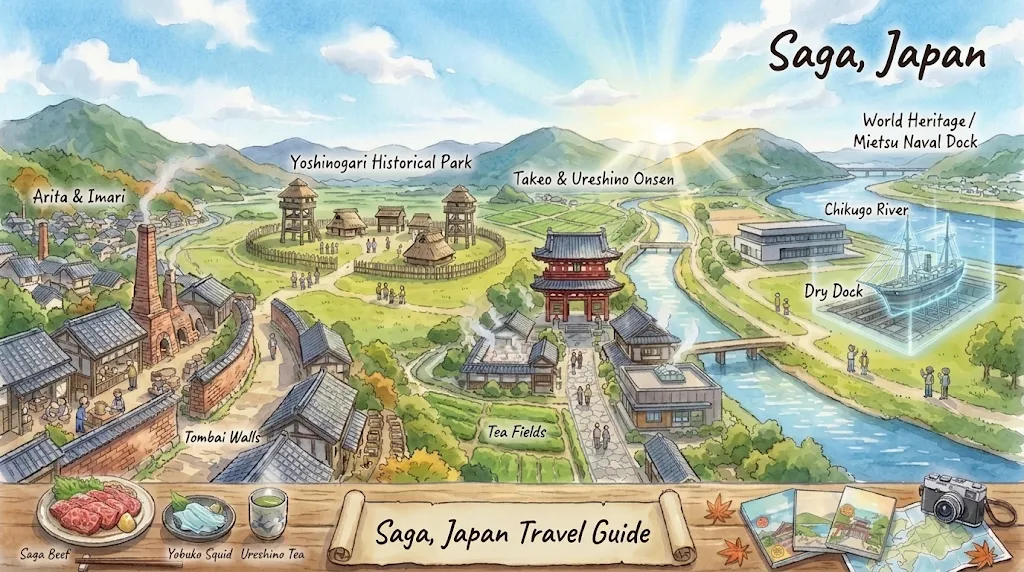
Located in northwestern Kyushu, Saga Prefecture blends porcelain heritage, Yayoi-period archaeology, Meiji industrial history, and hot spring towns[cite: 12]. Because historic kilns, archaeological sites, and hot spring resorts are spread across different rail and bus lines, checking connections ahead makes sightseeing much smoother[cite: 12]. Here is a practical guide to key spots, getting around Saga, and a sample 1-day itinerary.
🚆 Getting Around Saga
Saga is accessible from Fukuoka (Hakata) and Nagasaki via JR lines and the Nishi Kyushu Shinkansen (Kamome). Major IC cards work on many JR routes around Saga and Fukuoka, though local buses, rural lines, and sightseeing stops often benefit from checking timetables or renting a car.
| Destination Area | Typical Rail / Transit Route | Approx. Travel Time |
|---|---|---|
| Yoshinogari Historical Park | JR Nagasaki Main Line to Yoshinogari-Koen Station (~15–20 mins from Saga Station), then walk (~15 mins) | 30–35 mins from Saga Station |
| Takeo Onsen | JR Sasebo Line or Nishi Kyushu Shinkansen to Takeo-Onsen Station, then walk or local bus/taxi | ~30–40 mins from Saga Station |
| Arita & Imari Porcelain Area | JR Sasebo Line to Arita Station (or Matsuura Railway toward Imari), then walk, local bus, or taxi | ~50–70 mins from Saga Station to Arita |
| Ureshino Onsen | Nishi Kyushu Shinkansen to Ureshino-Onsen Station + bus/taxi, or direct highway/local bus | ~25–30 mins from Takeo-Onsen by Shinkansen/bus |
Practical note: Northern coastal stops like Yobuko and riverside/port heritage sites like Mietsu Naval Dock are easier to reach by rental car, tour, or timed bus/taxi connections—check local bus intervals before heading out.
📍 Key Sights, Onsen & Local Food
🏺 Arita & Imari: Porcelain Kilns & Tombai Walls
Arita and Imari are historic centers of Japanese porcelain, known for kaolin-based ceramics, historic kilns, porcelain museums, and alleys lined with tombai walls built using old kiln clay and brick fragments[cite: 12].
Practical tip: Kilns, galleries, and painting workshops have varying opening hours and rest days, and hands-on sessions often require advance booking. If buying fragile porcelain to take home, ask shops about protective packaging and carry it carefully.
⚓ Mietsu Naval Dock (Meiji Industrial Heritage)
Inscribed under the UNESCO World Heritage listing for Sites of Japan’s Meiji Industrial Revolution, Mietsu Naval Dock reflects 19th-century shipbuilding and modernization efforts by the Saga Domain[cite: 12].
Practical tip: Because the historic dock remains are preserved underground for protection, the site itself looks like an open/landscaped area—visit the nearby history/exhibition facility (such as the Sano Tsunetami and Mietsu Naval Dock History Museum) to see VR reconstructions and historical context, and check its opening hours in advance.
🌾 Yoshinogari Historical Park (Yayoi Period Site)
Yoshinogari Historical Park reconstructs a large Yayoi-period settlement with watchtowers, elevated storehouses, ditches, and experience programs[cite: 12].
Practical tip: The park grounds are wide with very little shade on open paths—wear comfortable walking shoes, bring a hat or umbrella/water in warm months, and check seasonal closing days and workshop times.
♨️ Takeo Onsen & Ureshino Onsen (Tea & Hot Springs)
Takeo Onsen is known for its vermilion Romon Gate and Takeo City Library, while Ureshino Onsen is famous for smooth hot spring waters and local Ureshino green tea[cite: 12].
Practical tip: Day-trip bathing hours at ryokan and public baths can be limited or vary by day, and libraries/cafes have set closing times—confirm bathing access ahead if you are not staying overnight.
🦑 What to Eat: Saga Beef, Yobuko Squid & Ureshino Tea
Saga specialties include Saga beef (known for fine marbling), fresh Yobuko squid (ika, often served sashimi-style with leftover parts prepared as tempura), local sake, and Ureshino tea[cite: 12]. Fresh squid availability and restaurant hours in coastal areas like Yobuko can be affected by sea conditions and afternoon closures, so plan a lunch stop earlier in the day.
🗓️ Sample 1-Day Itinerary: Arita Porcelain & Takeo / Ureshino
Because western Saga’s pottery towns and hot spring areas sit near each other along rail and road corridors, pairing Arita with Takeo or Ureshino makes a practical 1-day route[cite: 12]:
- 09:30 – Arita Porcelain Galleries & Tombai Walls: Walk through Arita’s ceramic streets, view porcelain displays, and browse kiln shops[cite: 12].
- 12:00 – Lunch in Arita or Takeo: Enjoy local dishes or Saga beef before heading to the hot spring area[cite: 12].
- 14:00 – Takeo Onsen Romon Gate & Library: Stop by Takeo’s historic gate and library/cafe area[cite: 12].
- 16:00 – Onsen Soak & Ureshino Tea: Relax in a hot spring bath and enjoy local tea[cite: 12].
- 18:00+ – Dinner or Return to Saga / Fukuoka / Nagasaki: Head back toward your base station or settle in for an evening meal.
Plan Your Stay & Passes in Saga
Compare ryokan in Ureshino or Takeo, and check tours or Kyushu rail passes in advance.