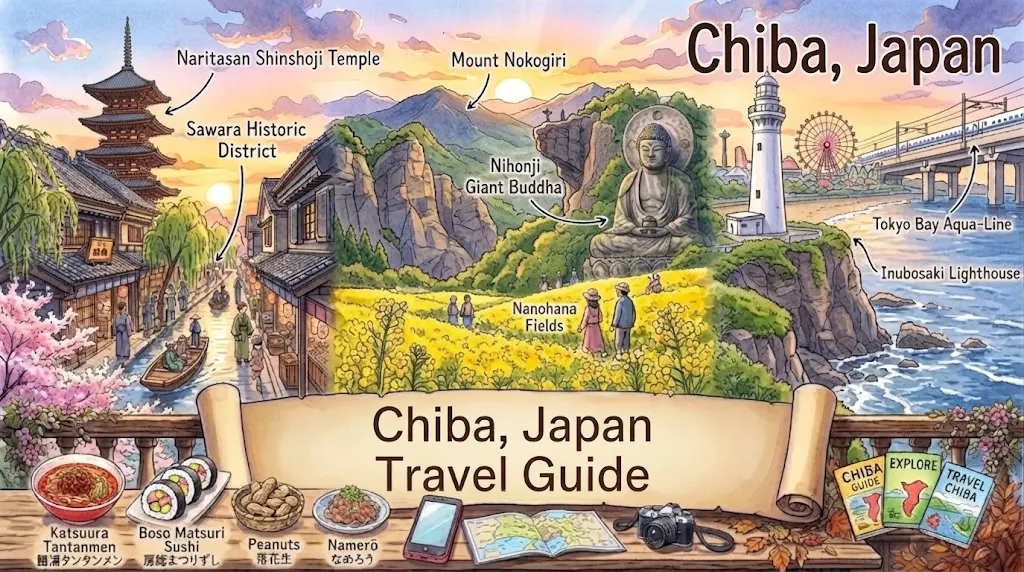
Extending east from Tokyo Bay across the Boso Peninsula, Chiba Prefecture pairs temple heritage near Narita and canal streets in Sawara with coastal cliffs, theme parks, and regional specialties like fresh seafood, peanuts, and Katsuura tantanmen. Because the peninsula spans wide distances and ropeways or boats depend on weather and seasonal hours, checking routes and schedules ahead helps keep plans smooth[cite: 21]. Here is a practical guide to key spots, getting around Chiba, and a sample 1-day itinerary[cite: 21].
🚆 Getting Around Chiba
Narita Airport (NRT) and Tokyo Bay/Chiba City connect easily by train or airport bus, while reaching southern Boso or eastern coasts like Kujukuri and Choshi takes longer by JR local lines, highway buses, or a rental car.
| Destination Area | Typical Transit Route | Approx. Travel Time |
|---|---|---|
| Naritasan Shinshoji Temple | Keisei Line or JR Narita Line from Narita Airport to Keisei-Narita or JR Narita Station (~10–15 mins), then ~10 min walk along Omotesando | ~20–30 mins from Narita Airport |
| Sawara Historic District | JR Narita Line east from Narita Station to Sawara Station (~30–35 mins), then walk/cycle to the canal area | ~35–45 mins from Narita Station |
| Mount Nokogiri (Nokogiriyama) | JR Uchibo Line to Hama-Kanaya Station + walk (~8 mins) to Nokogiriyama Ropeway (~4 mins ride), or Tokyo Bay Ferry to Kanaya Port | ~1.5–2.5+ hrs from central Tokyo/Chiba (varies by route) |
| Tokyo Bay Area (Maihama / Makuhari) | JR Keiyo Line / Musashino Line from Tokyo Station toward Maihama or Kaihin-Makuhari, or highway/airport bus | ~15–35 mins from Tokyo Station (varies by stop) |
Practical note: If visiting Naritasan Shinshoji during an airport layover, leave plenty of buffer for immigration, baggage, and returning to the airport before international check-in cutoffs.
📍 Key Sights, Coastlines, Bay Area & Local Food
✈️ Naritasan Shinshoji Temple & Sawara Canal Town
Near Narita Airport, Naritasan Shinshoji Temple is reached via the shop-lined Omotesando approach, while northeast Sawara preserves canal-side merchant buildings, boat rides, sake breweries, and the autumn Sawara Matsuri festival[cite: 21].
Practical tip: Check ritual/hall hours at Naritasan and boat or festival schedules in Sawara ahead of time, and expect busy streets on weekends, holidays, or during the autumn festival[cite: 21].
⛰️ Mount Nokogiri (Nihonji Temple) & Minamiboso
On the Boso Peninsula, Mount Nokogiri offers ropeway rides and walking paths through Nihonji Temple toward the stone Buddha and cliffside Jigoku Nozoki viewpoint, while southern Minamiboso features coastal roads, hot springs, and spring flower fields[cite: 21].
Practical tip: Nokogiriyama Ropeway closes earlier in winter (typically 16:00 from mid-November to mid-February vs. 17:00 in warmer months) and can suspend service in high winds or annual inspections—check daily operation status and wear sturdy shoes for steep stone steps.
🌊 Kujukuri Beach & Choshi (Inubosaki)
Facing the Pacific, Kujukuri Beach stretches along a long sandy shoreline popular with surfers, while eastern Choshi is known for fishing, soy sauce heritage, and coastal views around Inubosaki Lighthouse[cite: 21].
Practical tip: Ocean currents and coastal winds along open Pacific beaches can be strong—watch out for rip currents and coastal weather, and check train/bus timetables if traveling without a car.
🎢 Tokyo Bay Area (Maihama & Makuhari)
Along northwestern Chiba’s coast, the Tokyo Bay area hosts Tokyo Disney Resort in Urayasu as well as Makuhari in Chiba City with shopping malls, waterfront parks, event venues, and stadium sports[cite: 21].
Practical tip: Theme park tickets and popular bay-area restaurants often require advance planning, and trains on the Keiyo Line can get crowded at opening/closing times or during major stadium/convention events.
🐟 What to Eat: Namerou, Seafood, Peanuts & Katsuura Tantanmen
Chiba specialties include namerou (finely chopped fresh fish—often horse mackerel—seasoned with miso, ginger, and green onions), coastal seafood such as Ise-ebi (spiny lobster) and grilled shellfish, local peanuts (including boiled peanuts, peanut butter, and soft-serve), and spicy Katsuura tantanmen noodles with chili oil and onions[cite: 21]. Katsuura tantanmen can be quite spicy, so check spice options if you prefer milder flavors.
🗓️ Sample 1-Day Itinerary: Naritasan & Sawara Canal Town
Tokyo Disney Resort or southern Boso each work well on their own. For a 1-day trip connecting nearby northern Chiba spots by JR rail, pairing Naritasan with Sawara keeps transfers straightforward[cite: 21]:
- 09:00 – Naritasan Shinshoji & Omotesando: Walk along Omotesando and visit Naritasan Shinshoji Temple in the morning[cite: 21].
- 11:45 – Unagi Lunch Around Narita: Try local eel (unagi) or regional dishes near Omotesando[cite: 21].
- 13:15 – Train to Sawara: Ride the JR Narita Line east to Sawara Station[cite: 21].
- 14:00 – Sawara Canal Walk & Local Shops: Stroll along the historic willow-lined canal, browse shops, or sample local peanut treats[cite: 21].
- 17:30+ – Return Toward Narita or Tokyo: Head back by train/bus for your flight or evening plans[cite: 21].
Plan Your Stay & Passes in Chiba
Compare hotels in the Tokyo Bay area, near Narita Airport, or across the Boso Peninsula, and check transfers, tickets, or tours[cite: 21].