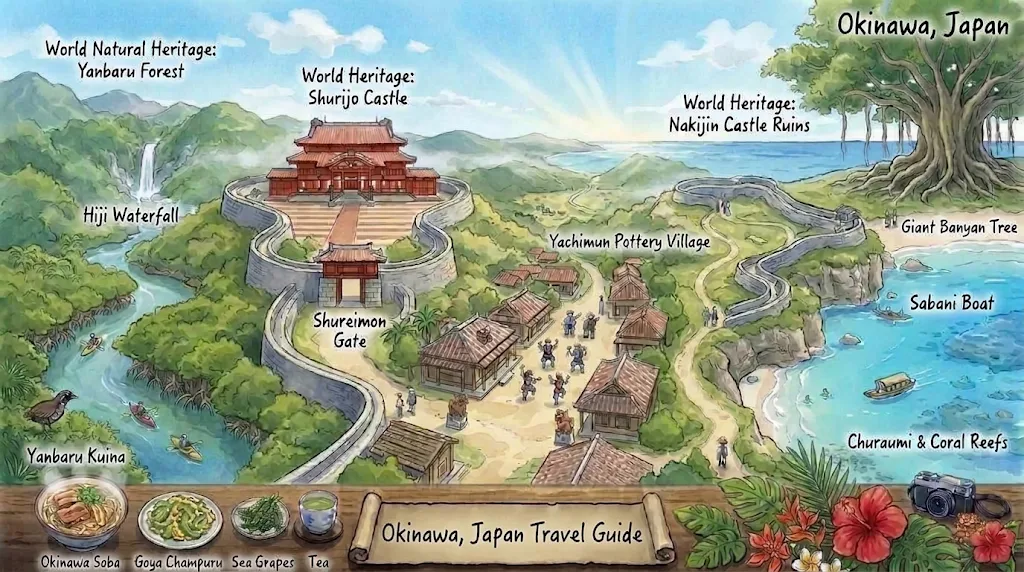
Located in southern Japan, Okinawa Prefecture is a subtropical island chain known for its Ryukyu Kingdom history, coral reefs, and northern forests. Because public rail is limited to Naha’s monorail, planning around rental cars, buses, ferry schedules, and seasonal weather is essential. Here is a practical guide to key sights, getting around from Naha, and a sample itinerary.
🚌 Getting Around Okinawa from Naha
Most visitors arrive at Naha Airport (OKA). Within Naha City, the Okinawa Urban Monorail (Yui Rail) is fast and straightforward, while reaching resorts, northern Yanbaru, or outer islands requires highway/local buses, ferries, or a rental car.
| Destination Area | Typical Route from Naha | Approx. Travel Time |
|---|---|---|
| Shurijo Castle (Naha) | Yui Rail from Naha Airport or Kencho-mae to Shuri Station (approx. 27 mins from airport), then walk or local bus | 40–50 mins |
| Onna Village & Blue Cave | Highway bus or rental car north along Route 58 / Okinawa Expressway | 50–75 mins |
| Motobu & Nakijin | Yanbaru Express Bus or rental car north via Okinawa Expressway | 1 hr 45 mins–2 hrs 15 mins |
| Kerama Islands (Zamami / Tokashiki) | High-speed jet foil or car ferry from Tomari Port (Naha) | 35–70 mins |
Practical note: Peak summer months (July–August), Golden Week, and typhoon season can cause heavy highway traffic or ferry cancellations. If renting a car, book well in advance and allow extra buffer time around Naha for traffic congestion.
📍 Key Sights, Culture & Local Food
🏰 Gusuku Sites: Shurijo Castle & Nakijin Castle Ruins
Okinawa’s Gusuku sites—part of the UNESCO World Heritage listing for the Kingdom of Ryukyu—highlight limestone fortifications built between the 15th and 19th centuries. In Naha, Shurijo Castle served as the royal palace and administrative center, while Nakijin Castle Ruins in northern Okinawa offers sweeping views over the East China Sea.
Practical tip: Restoration work at Shurijo Castle has been ongoing, so check current exhibition and courtyard access hours before going. At Nakijin Castle Ruins, wear walking shoes with good grip on uneven stone steps and bring sun protection, as shade is limited along the walls.
🌳 Yanbaru Forest: Wildlife, Mangroves & Hiji Waterfall
Northern Okinawa Main Island—known as Yanbaru—was inscribed as a UNESCO Natural World Heritage site in 2021 for its subtropical forests, mangroves, and endemic species such as the flightless Yanbaru kuina (Okinawa rail). Popular outdoor stops include mangrove river tours and the trail to Hiji Waterfall.
Practical tip: Because Yanbaru is a protected natural area, stay strictly on marked paths, never feed or disturb wildlife, and follow local rules for guided tours. Bug spray, rain gear, and checking waterfall trail closing times are important in humid subtropical weather.
🪸 Ocean & Reefs: Blue Cave and Kerama Islands
Clear waters around Onna Village’s Blue Cave (Maeda Point) and the Kerama Islands draw snorkelers and divers looking for coral gardens and tropical marine life.
Practical tip: Ocean conditions change quickly with waves and currents; tours and ferries frequently adjust or cancel departures for safety. If you go scuba diving, follow surface-interval guidelines before flying out of Naha Airport.
🌺 Traditional Crafts: Yachimun Pottery, Bingata & Sanshin
Local traditions remain active across the islands, from Yachimun ceramics (such as around Yomitan’s Yachimun no Sato) and vibrant Bingata stencil dyeing to Sanshin music and Shisa guardian statues.
Practical tip: Many pottery workshops and studios have specific open days or require reservations for hands-on sessions. If you buy fragile ceramics or glass items to take home, pack them carefully in carry-on luggage with padding.
🍜 What to Eat: Okinawa Soba, Goya Champuru & Awamori
Okinawan meals often feature Okinawa soba (wheat noodles in pork-and-bonito broth topped with pork belly or ribs), goya champuru (stir-fried bitter melon, tofu, pork, and egg), umibudo (sea grapes, best eaten fresh at room temperature rather than chilled), and awamori (traditional distilled rice spirit). Many local eateries close in the mid-afternoon or sell out of soba earlier in the day.
🗓️ Sample 1-Day Itinerary: Naha & Central Coast
Northern Yanbaru and the Kerama Islands each deserve dedicated time, so if you have just one day starting from Naha, focusing on Shuri and the central west coast keeps transit manageable:
- 09:00 – Shurijo Castle & Surrounding Streets: Take Yui Rail to Shuri Station and explore the castle grounds and stone-paved lanes in cooler morning hours.
- 11:30 – Lunch in Naha: Try Okinawa soba or a local teishoku (set meal) near Shuri or along Kokusai Dori.
- 13:30 – Drive or Bus to Yomitan / Onna: Head north along the coast to browse Yachimun pottery shops or relax by the beach.
- 16:30 – Sunset View Along the West Coast: Watch the sun set over the East China Sea before heading back toward Naha.
- 19:00 – Dinner & Live Sanshin Music in Naha: Enjoy champuru dishes, umibudo, and awamori at an izakaya in Naha.
Plan Your Stay & Activities in Okinawa
Compare hotels and flight bundles in Naha or Onna, or reserve marine and eco-tours in advance.