Located along the Seto Inland Sea in western Japan, Hiroshima Prefecture pairs peace memorials and castle history in Hiroshima City with coastal Miyajima and eastern port towns like Onomichi. Checking tide times for Miyajima, museum hours, and rail/tram connections helps plan a thoughtful and smooth itinerary[cite: 15]. Here is a practical guide to key spots, getting around Hiroshima, and a sample 1-day itinerary.
🚃 Getting Around Hiroshima
Hiroshima Station (served by the Sanyo Shinkansen and JR lines) connects easily to central sightseeing areas by Hiroshima Electric Railway (streetcar/Hiroden) and buses. Reaching Miyajima requires a train/tram plus a short ferry ride[cite: 15].
| Destination Area | Typical Route from Hiroshima Station | Approx. Travel Time |
|---|---|---|
| Atomic Bomb Dome & Peace Park | Hiroden streetcar (e.g., Line 2 or Line 6) from Hiroshima Station toward Genbaku-Dome-mae, or bus/walk | 20–30 mins |
| Miyajima (Itsukushima Shrine) | JR Sanyo Line to Miyajimaguchi Station (or Hiroden to Miyajimaguchi), then ferry (~10 mins) to Miyajima Pier | ~45–75 mins total (including ferry) |
| Hiroshima Castle & Shukkeien | Streetcar, bus, or walk from central Hiroshima / Hiroshima Station (Shukkeien is close to JR Shin-Hakushima / Hiroshima Station) | 15–25 mins |
| Onomichi (Shimanami Kaido) | JR Sanyo Line or Sanyo Shinkansen (via Fukuyama) east from Hiroshima Station toward Onomichi | ~1 hr–1 hr 45 mins (varies by train) |
Practical note: If riding the JR West Miyajima Ferry, check current boarding/fee rules and local visitor fees (such as the Miyajima visitor tax) in advance, and verify ferry return times during evening hours.
📍 Key Sights, Islands & Local Food
🕊️ Atomic Bomb Dome, Peace Memorial Park & Museum
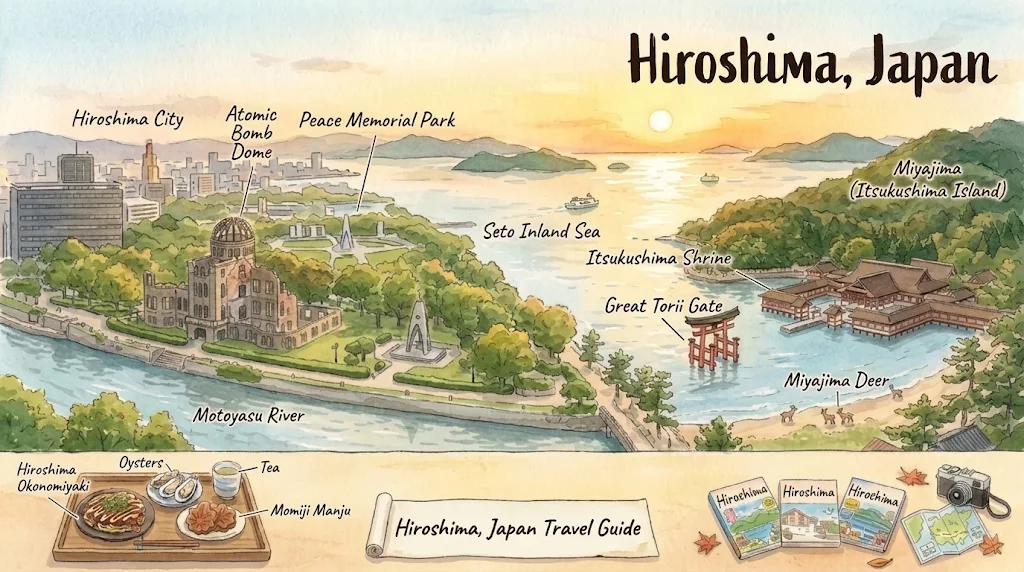
In central Hiroshima, the preserved ruins of the Atomic Bomb Dome (inscribed as a UNESCO World Heritage site in 1996) stand beside Peace Memorial Park and the Hiroshima Peace Memorial Museum along the Motoyasu River[cite: 15].
Practical tip: Museum opening and last-admission hours vary by season, and exhibits can take 1.5–2+ hours to read carefully. Keep a respectful, quiet tone in memorial spaces and check current admission procedures before visiting.
⛩️ Itsukushima Shrine, Grand Torii Gate & Miyajima
Reachable by ferry from Miyajimaguchi, Miyajima (Itsukushima) is home to the UNESCO-listed Itsukushima Shrine, its offshore vermilion torii gate, Mount Misen (via ropeway or hiking trails), and wild deer[cite: 15].
Practical tip: High tide creates the floating-shrine look, while low tide lets you walk out toward the torii gate on wet sand/tidal flats—check tide times ahead and wear shoes that handle damp ground. Never feed or touch wild deer (they can be persistent around food), and check Mount Misen ropeway operating hours.
🏯 Hiroshima Castle & Shukkeien Garden
Hiroshima Castle (with a reconstructed main keep housing historical exhibits) and nearby Shukkeien Garden (established in 1620 with ponds, bridges, and miniature landscapes) offer quieter cultural stops in the city[cite: 15].
Practical tip: Check seasonal closing hours and last-entry times for both the castle keep and Shukkeien Garden, especially during winter or holiday periods.
🚲 Onomichi & the Shimanami Kaido Route
In eastern Hiroshima Prefecture, Onomichi is known for hillside lanes, temples such as Senko-ji, Seto Inland Sea views, and serving as a mainland gateway to the Shimanami Kaido cycling route[cite: 15].
Practical tip: Onomichi has steep slopes and narrow steps—wear good walking shoes, check Senko-ji Ropeway schedules, and reserve bikes/return plans early if cycling the Shimanami Kaido.
🦪 What to Eat: Hiroshima Okonomiyaki, Oysters & Momiji Manju
Hiroshima is famous for Hiroshima-style okonomiyaki (built in layers with batter, cabbage, pork, egg, and often yakisoba or udon noodles on a hot griddle), Seto Inland Sea oysters (kaki, peak in cooler months and enjoyed grilled, fried, or raw at trusted spots), and momiji manju (maple-leaf cakes filled with sweet bean paste or other fillings)[cite: 15]. Counter seats at popular okonomiyaki restaurants and buildings (such as Okonomimura) often have lines at peak meal hours.
🗓️ Sample 1-Day Itinerary: Peace Park & Miyajima
Onomichi works well as a separate day trip or stop along a western Honshu route. For a 1-day itinerary based in Hiroshima City, pairing central memorials with Miyajima is a classic choice[cite: 15]:
- 08:30 – Peace Memorial Park & Museum: Visit the Atomic Bomb Dome, Peace Memorial Park, and the museum in the morning[cite: 15].
- 11:30 – Head Toward Miyajima: Ride the train or streetcar toward Miyajimaguchi and take the ferry across to Miyajima[cite: 15].
- 12:45 – Lunch on Miyajima: Have lunch near the pier or shopping street before walking to the shrine[cite: 15].
- 14:00 – Itsukushima Shrine & Torii Gate: Explore the shrine halls and view the torii gate according to the day’s tide level[cite: 15].
- 18:00+ – Return & Hiroshima Okonomiyaki Dinner: Take the ferry and train/tram back to central Hiroshima for Hiroshima-style okonomiyaki and local oysters[cite: 15].
Plan Your Stay & Passes in Hiroshima
Compare hotels in Hiroshima City or stays on Miyajima, and check ferry tickets, tours, or rail passes.