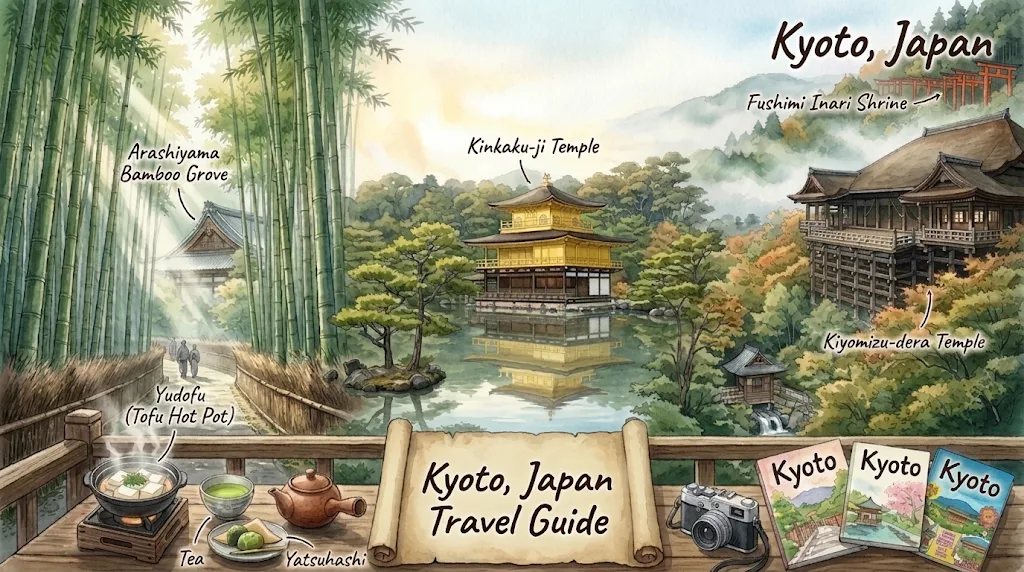
With centuries of imperial history, UNESCO-listed temples and gardens, shrines, and refined food traditions, Kyoto offers a deep cultural experience across several distinct neighborhoods. Because popular spots sit in different parts of the city and bus traffic can slow down, grouping nearby stops and going early helps keep your day manageable. Here is a practical guide to key sights, getting around Kyoto, and a sample 1-day itinerary.
🚆 Getting Around Kyoto
Kyoto Station (served by the Tokaido Shinkansen, JR lines, and subway) is a major transit hub. While city buses reach many sights, they often face heavy traffic—combining JR, Keihan, Hankyu, Randen tram, and subway lines with walking is often faster and more predictable.
| Destination Area | Typical Route from Kyoto Station | Approx. Travel Time |
|---|---|---|
| Fushimi Inari Taisha | JR Nara Line from Kyoto Station to Inari Station (~5 mins), right next to the shrine | ~10–15 mins |
| Arashiyama (Tenryu-ji & Bamboo Grove) | JR Sagano Line to Saga-Arashiyama Station (~15–20 mins) + walk, or Randen tram/bus | ~25–45 mins |
| Kiyomizu-dera Temple | City bus or Keihan Line (e.g., to Kiyomizu-Gojo) + uphill walk (~20–25 mins) through Higashiyama lanes | ~35–50 mins (depending on traffic & walk) |
| Kinkaku-ji & Ryoan-ji | Subway + local bus or taxi/bus from central/northern Kyoto | ~40–60 mins (traffic-dependent) |
Practical note: Because Arashiyama (west), Fushimi Inari (south), Higashiyama/Kiyomizu-dera (east), and Kinkaku-ji/Ryoan-ji (northwest) sit far apart, try to pick two compatible areas per day rather than crossing the whole city repeatedly.
📍 Key Sights, Gardens, Temples & Local Food
🎋 Arashiyama: Tenryu-ji Temple & the Bamboo Grove
In western Kyoto, Arashiyama features the UNESCO-listed Tenryu-ji Temple (known for its Sogenchi pond garden and shakkei mountain views) and the nearby Arashiyama Bamboo Grove.
Practical tip: The bamboo path gets crowded mid-morning onward—visiting early in the morning gives a much calmer walk, and wearing comfortable shoes helps on paths and temple grounds.
⛩️ Fushimi Inari Taisha & Senbon Torii Trails
Founded in 711, Fushimi Inari Taisha is known for thousands of vermilion torii gates (Senbon Torii) and forested hiking trails winding up Mount Inari.
Practical tip: The main shrine grounds are open 24 hours, while the lower torii tunnel sees heavy crowds during the day—going early or hiking past the first viewpoint to quieter upper trails makes for a better experience. Wear good walking shoes and bring water if climbing higher up the mountain.
🏯 Kiyomizu-dera Temple & Wooden Stage
Part of Historic Monuments of Ancient Kyoto, Kiyomizu-dera sits on a hillside in Higashiyama and is famous for its wooden stage built without nails, city views, and Otowa Waterfall below.
Practical tip: Approach lanes (such as Sannenzaka and Ninenzaka) have stone steps and slopes—wear sturdy walking shoes, check seasonal opening/closing times (including any special evening hours), and watch for busy pedestrian traffic.
✨ Kinkaku-ji (Golden Pavilion) & Ryoan-ji Rock Garden
In northern Kyoto, Kinkaku-ji (Rokuon-ji) features gold-leaf pavilion walls beside Kyoko-chi pond, while nearby Ryoan-ji is famous for its karesansui dry-landscape rock and raked-gravel garden.
Practical tip: Both temples have set opening and closing hours, and viewing areas around the pond and rock garden are compact—keep voices quiet, stay on designated walkways, and check transit options between the two sites.
🍵 What to Eat: Yudofu, Matcha & Yatsuhashi
Kyoto food highlights include yudofu (simmered hot tofu, popular around Arashiyama and temples), matcha (powdered green tea from the Kyoto/Uji area in tea rooms and sweets), and yatsuhashi (cinnamon-scented or sweet-filled rice confections). Raw or soft nama-yatsuhashi has a shorter shelf life than baked versions, so check expiration dates when buying souvenirs.
🗓️ Sample 1-Day Itinerary: Fushimi Inari & Higashiyama / Kiyomizu-dera
Rather than trying to visit every side of Kyoto in one day, starting early at Fushimi Inari and moving north toward Higashiyama and Kiyomizu-dera keeps your route focused:
- 07:30 – Fushimi Inari Taisha: Arrive early to walk through the torii gates before peak daytime crowds build.
- 10:30 – Head Toward Higashiyama / Kiyomizu-dera: Travel north toward eastern Kyoto and walk up through the historic streets toward Kiyomizu-dera.
- 12:00 – Lunch & Matcha Break: Enjoy yudofu, local noodles, or matcha sweets along the Higashiyama lanes.
- 14:00 – Kiyomizu-dera Temple: Visit the wooden stage, main hall, and temple grounds.
- 17:00+ – Gion / Central Kyoto Dinner: Stroll toward Gion or central Kyoto for dinner and evening plans.
Plan Your Stay & Experiences in Kyoto
Compare hotels near Kyoto Station, Gion/Higashiyama, or Arashiyama, and check cultural tours or rail passes.