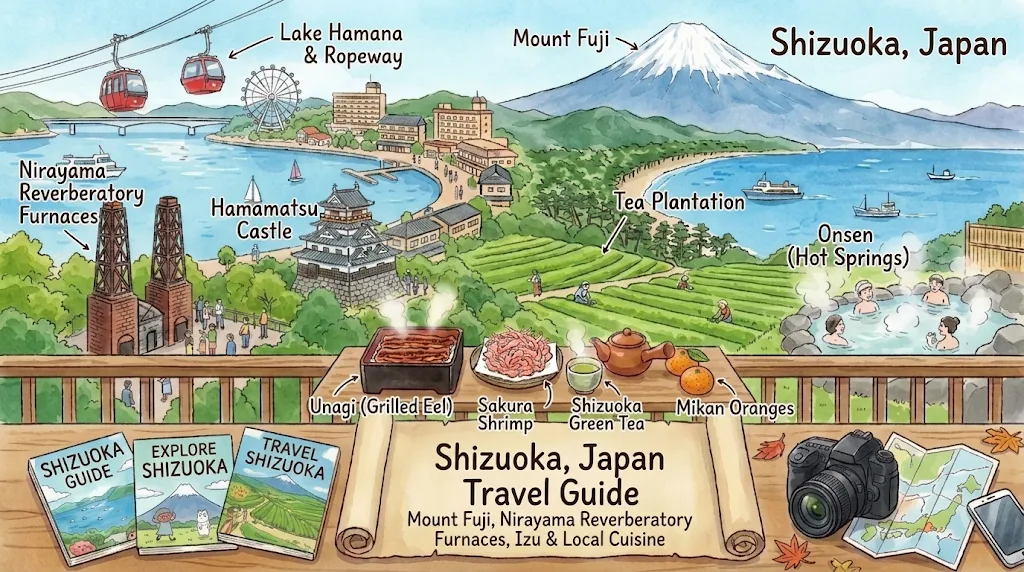
Stretching along the Pacific coast from the Izu Peninsula past Mount Fuji to Lake Hamana, Shizuoka Prefecture combines mountain views, coastal pine groves, Meiji industrial heritage, hot springs, and regional food. Because Shizuoka covers a wide east-west distance and mountain visibility depends on weather, checking Shinkansen/local train stops and bus schedules ahead helps keep plans smooth. Here is a practical guide to key spots, getting around Shizuoka, and a sample 1-day itinerary.
🚄 Getting Around Shizuoka
The Tokaido Shinkansen and JR Tokaido Line run east-west across Shizuoka Prefecture, while local lines (such as the Minobu Line toward Fujinomiya or Izuhakone Railway / Izu Kyuko in Izu) and buses connect specific sights. Check whether a Shinkansen train stops at your target station before boarding.
| Destination Area | Typical Transit Route | Approx. Travel Time |
|---|---|---|
| Miho no Matsubara (Shizuoka City) | JR Tokaido Line from Shizuoka Station to Shimizu Station (~10–15 mins), then route bus (~25 mins) toward Miho | ~45–55 mins from Shizuoka Station |
| Fujisan Hongu Sengen Taisha (Fujinomiya) | Tokaido Shinkansen to Shin-Fuji Station or JR Tokaido Line to Fuji Station + JR Minobu Line to Fujinomiya Station, then walk (~10 mins) | ~60–90 mins from Shizuoka City (varies by train) |
| Nirayama Reverberatory Furnace (Izu) | Tokaido Shinkansen to Mishima Station + Izuhakone Railway to Izu-Nagaoka Station + bus/walk (~20–25 mins to furnace) | ~45–60 mins from Mishima Station |
| Izu Peninsula Onsen (Atami, Ito & Shuzenji) | Tokaido Shinkansen to Atami Station, then JR Ito Line / Izu Kyuko Line east/south or Izuhakone Railway to Shuzenji | ~35–80+ mins from Atami (varies by town) |
Practical note: Because Shizuoka stretches far east to west, try to focus on one main zone per day—such as Shizuoka City/Miho, Fujinomiya/Mt. Fuji foothills, Izu, or Hamamatsu/Lake Hamana.
📍 Key Sights, Coast, Onsen & Local Food
🗻 Mount Fuji (Shizuoka Side), Sengen Taisha & Tea Fields
Shizuoka’s southern/southeastern side of Mount Fuji offers views toward Suruga Bay, historic Fujisan Hongu Sengen Taisha in Fujinomiya, the 1707 Hoei Crater on the slope, and tea landscapes such as Makinohara.
Practical tip: Mount Fuji is often clearest in the early morning before clouds build up, and mountain roads/trails have seasonal closures and weather restrictions—check weather forecasts and road/trail access before heading toward higher elevations.
🏭 Nirayama Reverberatory Furnace (Meiji Industrial Heritage)
Built in 1857 in the Izu area and part of the UNESCO World Heritage listing for Sites of Japan’s Meiji Industrial Revolution, the Nirayama Reverberatory Furnace preserves stone/brick furnaces constructed for iron casting during late-Edo coastal defense efforts.
Practical tip: Check opening hours and admission/guided-tour details in advance, and wear comfortable shoes for gravel and garden paths around the site.
🌊 Miho no Matsubara & Izu Peninsula Onsen (Atami, Ito, Shuzenji)
In Shizuoka City, Miho no Matsubara lines the coast with pine trees and views toward Mount Fuji (included in Mt. Fuji’s World Heritage cultural landscape), while the Izu Peninsula offers coastal and hot spring towns including Atami, Ito, and Shuzenji.
Practical tip: Along Miho no Matsubara, coastal paths and pebble/sand beaches can be windy or uneven—stay clear of rough surf and check bus return times. Across Izu, allow extra transit time between coastal railway lines and inland hot spring areas like Shuzenji.
🍵 What to Eat: Shizuoka Green Tea, Sakura-ebi & Unagi
Shizuoka specialties include Shizuoka green tea (sencha), sakura-ebi (small pink shrimp associated with Suruga Bay, served in tempura, over rice, or raw where fresh), and grilled unagi (eel, popular around Lake Hamana and across the prefecture). Check seasonal fishing/availability for fresh sakura-ebi and arrive early or reserve for popular unagi restaurants.
🗓️ Sample 1-Day Itinerary: Shizuoka City & Miho no Matsubara
Because Izu, Fujinomiya, and Lake Hamana sit far apart across Shizuoka, a 1-day trip based in Shizuoka City easily combines coastal pine views, green tea, and local seafood without long cross-prefecture transfers:
- 08:30 – Head to Miho no Matsubara: Ride the train toward Shimizu and take a bus out to the pine grove for clearer morning views toward Mount Fuji.
- 11:30 – Seafood Lunch (Sakura-ebi & Local Catch): Enjoy sakura-ebi tempura or fresh coastal seafood near Shimizu or central Shizuoka.
- 14:00 – Central Shizuoka & Green Tea Break: Return to central Shizuoka to visit local shops, historic sites, or a tea house serving Shizuoka sencha.
- 16:30 – Stroll & Souvenir Shopping: Browse local tea, sweets, and specialty items near Shizuoka Station.
- 18:30 – Dinner in Shizuoka City: Have dinner featuring local seafood, unagi, or regional dishes.
Plan Your Stay & Passes in Shizuoka
Compare hot spring ryokan in Atami or Ito, Mt. Fuji-area stays, or city hotels, and check tours or rail passes.