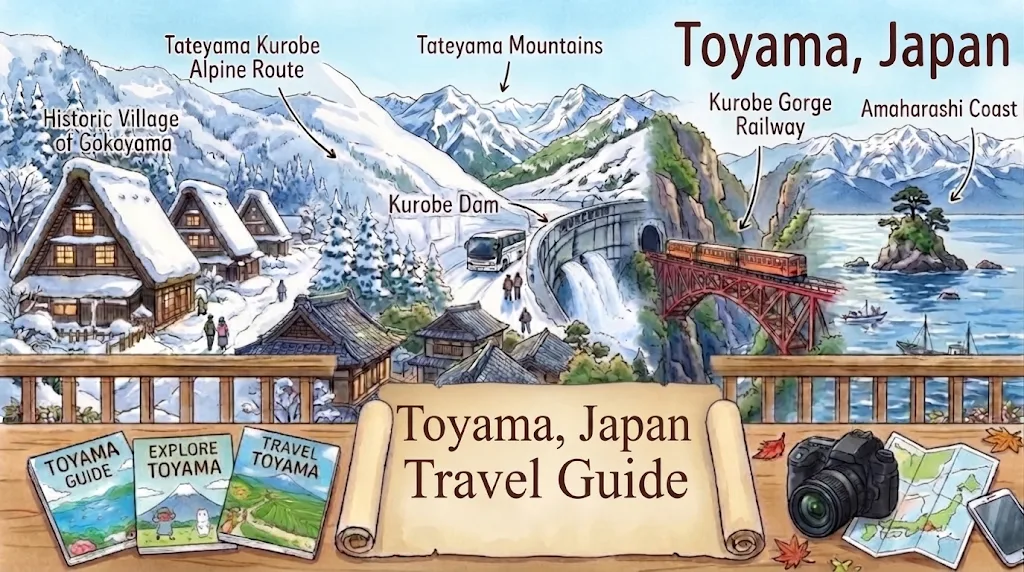
Between the Northern Japan Alps and Toyama Bay, Toyama Prefecture combines Gokayama’s thatched villages, the Tateyama Kurobe Alpine Route, Kurobe Gorge and Unazuki Onsen, bronze heritage in Takaoka, and fresh Toyama Bay seafood. Because alpine routes and gorge trains operate seasonally and mountain buses have set schedules, checking timetables and weather ahead helps keep plans smooth[cite: 25]. Here is a practical guide to key spots, getting around Toyama, and a sample 1-day itinerary[cite: 25].
🚆 Getting Around Toyama
Toyama Station (served by the Hokuriku Shinkansen, local rail lines, and trams) is the main hub for the prefecture, while alpine routes, mountain gorges, and rural valleys rely on local trains, buses, cable cars/ropeways, or rental cars[cite: 25].
| Destination Area | Typical Transit Route | Approx. Travel Time |
|---|---|---|
| Tateyama Kurobe Alpine Route (Dentetsu-Toyama / Tateyama side) | Toyama Chiho Railway from Dentetsu-Toyama Station to Tateyama Station (~60 mins), then alpine transport (cable car/bus/ropeway) | ~1 hr to Tateyama + alpine transfers |
| Kurobe Gorge & Unazuki Onsen | Toyama Chiho Railway from Dentetsu-Toyama Station to Unazuki-Onsen Station (~75–85 mins), then Kurobe Gorge Railway | ~1 hr 15 mins–1 hr 25 mins to Unazuki |
| Takaoka | Hokuriku Shinkansen (Shin-Takaoka) or local train from Toyama Station to Takaoka Station, then walk/tram/bus | ~15–25 mins by local train from Toyama |
| Gokayama (Ainokura & Suganuma) | Route/highway bus from Takaoka or Toyama/Shirakawa-go/Kanazawa area, or rental car | ~1–2+ hrs (varies by starting point & bus) |
Practical note: Alpine and gorge routes run on seasonal schedules and can face weather or road closures—check current operating dates and train/bus connections before booking[cite: 25].
📍 Key Sights, Mountains, Towns & Local Food
🏠 Gokayama (Ainokura & Suganuma Gassho-zukuri Villages)
Inscribed as a UNESCO World Heritage site, Gokayama includes traditional thatched gassho-zukuri villages such as Ainokura and Suganuma, known for steep roofs, quiet mountain lanes, washi paper crafts, and Kokiriko folk music[cite: 25].
Practical tip: Because villages are inhabited communities in mountain terrain, stay on marked paths, respect private property, wear sturdy shoes (especially when icy or wet), and check limited bus times and workshop hours ahead.
🏔️ Tateyama Kurobe Alpine Route & Kurobe Dam
Crossing high mountain terrain up to around 2,450 meters via multiple conveyances, the Tateyama Kurobe Alpine Route is known for the spring snow corridor (Yuki-no-Otani), summer/autumn alpine scenery, and Kurobe Dam[cite: 25].
Practical tip: The route is seasonal (typically mid-April to late November) and temperatures at high elevation are much colder than in Toyama City even in spring or autumn—dress in warm layers, bring sunglasses/sunscreen for snow glare, and check ticket/reservation requirements and weather holds in advance[cite: 25].
🚂 Kurobe Gorge Railway & Unazuki Onsen
Along the steep Kurobe Gorge, the open-air Kurobe Gorge Torokko Railway runs past cliffs, bridges, and river views near the hot spring resort of Unazuki Onsen[cite: 25].
Practical tip: Open-air cars let mountain wind and tunnel air pass straight through—wear warm clothes and a windproof jacket even in warmer months, and check seasonal operation and any section closures before traveling to Unazuki[cite: 25].
🥉 Takaoka: Bronze Craft, Takaoka Daibutsu & Zuiryuji
Western Toyama’s Takaoka is known for metalwork/casting traditions, the Takaoka Daibutsu bronze Buddha, National Treasure Zuiryuji Temple, and local Doraemon public art[cite: 25].
Practical tip: Check temple and museum opening hours and closing days in advance, and wear comfortable shoes for walking between station, temple, and town areas[cite: 25].
🍣 What to Eat: Shiroebi, Hotaruika, Sushi & Toyama Black Ramen
Toyama Bay specialties include shiroebi (sweet white shrimp, typically harvested in spring through autumn), hotaruika (firefly squid, peaking in spring), local sushi, and Toyama black ramen (known for a dark, savory soy-sauce-based broth) paired with local sake[cite: 25]. Seasonal seafood availability depends on the time of year, and popular sushi and ramen spots can have lines at peak hours[cite: 25].
🗓️ Sample 1-Day Itinerary: Toyama City, Bay Seafood & Takaoka
The Tateyama Kurobe Alpine Route or Kurobe Gorge each work well as a dedicated full-day trip during their open seasons[cite: 25]. For a 1-day itinerary that runs smoothly in any season, combining Toyama City with nearby Takaoka keeps rail travel short[cite: 25]:
- 09:00 – Central Toyama & Waterfront/City Walk: Explore central Toyama by tram or walk around the city before heading west[cite: 25].
- 11:30 – Toyama Bay Sushi or Shiroebi Lunch: Enjoy local seafood and sushi around Toyama or Takaoka[cite: 25].
- 13:30 – Ride to Takaoka: Take a short local train ride west to Takaoka[cite: 25].
- 14:15 – Zuiryuji Temple & Takaoka Daibutsu: Visit the temple halls and bronze Buddha statue in Takaoka[cite: 25].
- 17:30+ – Return & Toyama Black Ramen Dinner: Head back toward Toyama Station for dinner and local ramen or sake[cite: 25].
Plan Your Stay & Passes in Toyama
Compare hotels near Toyama Station or ryokan in Unazuki Onsen, and check Hokuriku rail passes, alpine tickets, or tours[cite: 25].