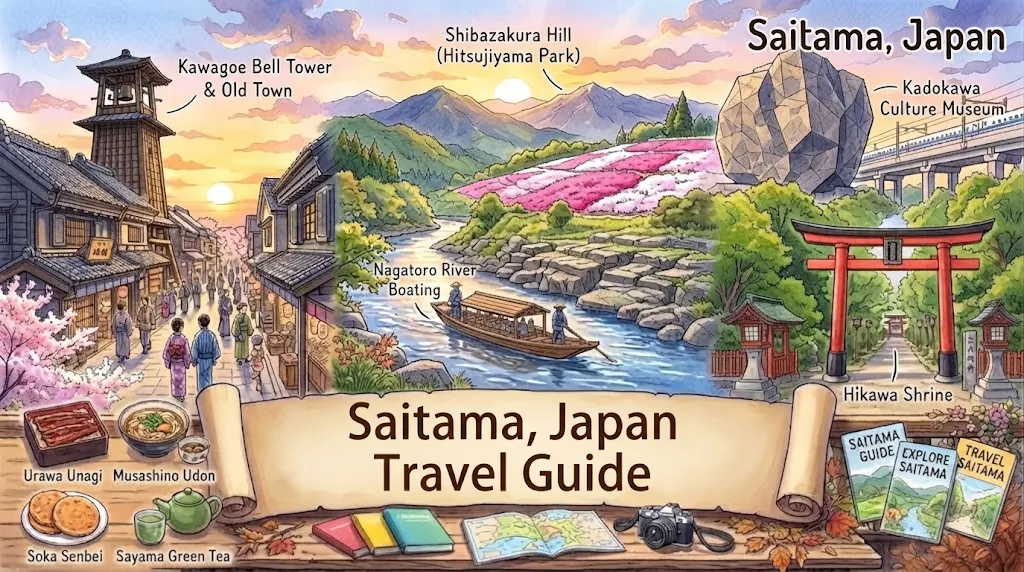
Just north of Tokyo, Saitama Prefecture brings together Kawagoe’s historic streets, mountain and river scenery in Chichibu and Nagatoro, railways and bonsai in Omiya, cultural/park spots in Tokorozawa and Hanno, and local specialties like Musashino udon and unagi. Because river boats depend on water levels and seasonal attractions or museums have set schedules, checking timetables and operating status ahead helps keep plans smooth[cite: 20]. Here is a practical guide to key spots, getting around Saitama, and a sample 1-day itinerary[cite: 20].
🚆 Getting Around Saitama
Omiya Station is a major Shinkansen and JR hub in Saitama, while private railways (Tobu, Seibu, Chichibu Railway) and local buses connect Kawagoe, Chichibu, Nagatoro, Tokorozawa, and Hanno.
| Destination Area | Typical Transit Route | Approx. Travel Time |
|---|---|---|
| Kawagoe (Kurazukuri & Hikawa Shrine) | JR Kawagoe Line from Omiya Station to Kawagoe Station (~20 mins), or Tobu Tojo / Seibu Shinjuku lines from Tokyo + local bus/walk | ~20 mins by train from Omiya + bus/walk |
| Chichibu & Nagatoro | Seibu Limited Express (Laview / Red Arrow) from Ikebukuro toward Seibu-Chichibu, or Chichibu Railway around Nagatoro/Chichibu | ~1 hr 20 mins–1 hr 45 mins from Ikebukuro to Chichibu |
| Omiya (Railway Museum & Bonsai Village) | New Shuttle (1 stop to Tetsudo-Hakubutsukan) or JR Utsunomiya/Takasaki/Tobu lines from Omiya Station | ~5–15 mins from Omiya Station |
| Tokorozawa & Hanno | Seibu lines from Ikebukuro/Shinjuku toward Tokorozawa or Hanno + local bus to Kadokawa Culture Museum or Moominvalley Park / Metsä | ~25–60+ mins (varies by line & bus) |
Practical note: Chichibu and Nagatoro are in western Saitama—plan them as a dedicated day trip or overnight stay rather than pairing them with distant spots across the prefecture.
📍 Key Sights, Nature, Culture & Local Food
🏯 Kawagoe (“Little Edo”): Kurazukuri, Toki no Kane & Hikawa Shrine
Known as Koedo (“Little Edo”), Kawagoe preserves clay-walled merchant storehouses in the Kurazukuri Zone, the Toki no Kane bell tower, Kashiya Yokocho (Penny Candy Alley), and Kawagoe Hikawa Shrine[cite: 20].
Practical tip: Streets around Kurazukuri and Kashiya Yokocho are narrow and get crowded on weekends and holidays—arrive earlier in the day, wear comfortable walking shoes, and check shop/kimono-rental closing times ahead[cite: 20].
⛰️ Chichibu & Nagatoro: River Boating, Hitsujiyama & Festivals
In western Saitama, Nagatoro is known for river boat rides (kawakudari) past iwadatami rock formations along the Arakawa River, while Chichibu features Chichibu Shrine, spring moss phlox (shibazakura) at Hitsujiyama Park, and the UNESCO-listed Chichibu Night Festival in December[cite: 20].
Practical tip: Nagatoro river boat rides can suspend or alter courses due to water levels, weather, or maintenance—verify same-day operating status before going. For spring shibazakura or the December night festival, expect seasonal crowds and dress for mountain temperatures[cite: 20].
🚅 Omiya: The Railway Museum, Bonsai Village & Hikawa Shrine
Around Omiya, visitors find The Railway Museum, Omiya Bonsai Village and the Omiya Bonsai Art Museum, and Musashi Ichinomiya Hikawa Shrine with its long approach[cite: 20].
Practical tip: Check weekly closing days and advance ticket/admission rules for The Railway Museum and the Omiya Bonsai Art Museum before planning your visit[cite: 20].
📚 Tokorozawa & Hanno: Kadokawa Culture Museum & Moominvalley Park
In Tokorozawa, the Kadokawa Culture Museum features distinctive architecture and bookshelves alongside Sayama Hills scenery, while Hanno hosts Moominvalley Park and Metsä Village by Lake Miyazawa[cite: 20].
Practical tip: Check facility closing days, indoor exhibition/theater access rules, and bus schedules from nearest stations in advance[cite: 20].
🍜 What to Eat: Musashino Udon, Unagi & Chichibu Misopote
Saitama specialties include Musashino udon (thick, chewy noodles often served cool/room-temperature for dipping into a warm savory broth with pork and green onions/leeks), unagi (grilled freshwater eel, well known in areas such as Urawa and Kawagoe), and Chichibu misopote (fried potato slices glazed in sweet-savory miso)[cite: 20]. Popular unagi restaurants can sell out or have waits, so plan meals early[cite: 20].
🗓️ Sample 1-Day Itinerary: Kawagoe (“Little Edo”) & Local Specialties
Chichibu/Nagatoro or Tokorozawa/Hanno each work well as a separate day trip. For an easy 1-day trip from Tokyo or Omiya, exploring Kawagoe’s historic streets and local food keeps travel simple[cite: 20]:
- 09:00 – Arrive in Kawagoe & Walk the Kurazukuri Zone: Explore the clay-walled storehouses and Toki no Kane bell tower in the morning[cite: 20].
- 11:30 – Kawagoe Hikawa Shrine: Walk or take a short bus/taxi ride to Hikawa Shrine[cite: 20].
- 12:45 – Lunch (Unagi or Musashino Udon): Enjoy local unagi or hearty Musashino udon[cite: 20].
- 14:30 – Kashiya Yokocho & Cafe Break: Browse traditional sweets and snacks along Penny Candy Alley[cite: 20].
- 17:00+ – Return Toward Tokyo or Omiya: Head back by train for dinner or onward plans[cite: 20].
Plan Your Stay & Passes in Saitama
Compare hotels near Omiya Station, stays around Kawagoe, or retreats in Chichibu, and check day tours or tickets[cite: 20].