The Secret Power of Daruma Dolls: Japan’s Iconic Symbol of Perseverance and Good Luck
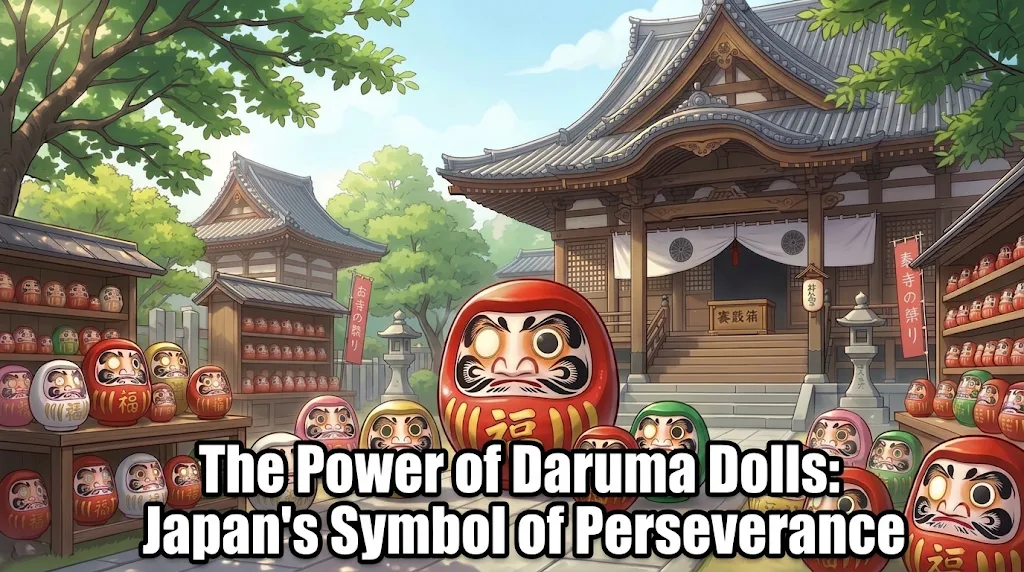
If you have ever visited a Japanese temple, a traditional gift shop, or even the desk of a Japanese business person, you have likely encountered a round, red, eyeless wooden or papier-mâché doll. This is the Daruma doll—one of Japan’s most beloved and enduring symbols of perseverance, goal-setting, and good luck.
Table of Contents
- 1. What is a Daruma Doll?
- 2. The Origin: Bodhidharma and the Legend of Wall-Gazing
- 3. Anatomy of a Daruma: Why is it Red and Round?
- 4. How to Make a Wish with Daruma
- 5. Different Colors and Their Meanings
- 6. Cultural Significance in Modern Japan
1. What is a Daruma Doll?
At first glance, a Daruma doll might look like a simple toy or a decorative ornament. However, it is deeply rooted in Zen Buddhism and Japanese folklore. Traditionally made of papier-mâché, Daruma dolls are modeled after Bodhidharma, the founder of Zen Buddhism in China.
What makes Daruma unique is its shape: weighted at the bottom, it always returns to an upright position when tipped over. This physical characteristic gave rise to the Japanese proverb, “Nana korobi ya oki”, which translates to “Fall down seven times, stand up eight.” It serves as a powerful reminder never to give up, no matter how many times you fail.
2. The Origin: Bodhidharma and the Legend of Wall-Gazing
The history of the Daruma dates back to the 5th or 6th century. According to legend, Bodhidharma spent nine years meditating in front of a cave wall to achieve spiritual enlightenment.
Legend also says that because he sat motionless for so long, his legs and arms eventually withered away or fell off. This is why traditional Daruma dolls are limbless and round. Furthermore, it is said that once, when he accidentally fell asleep during meditation, he became so angry at himself that he cut off his own eyelids to ensure it would never happen again. According to folklore, where his eyelids fell to the ground, the first green tea plants sprouted—which is why green tea is consumed to stay awake during meditation.
3. Anatomy of a Daruma: Why is it Red and Round?
Every feature of a Daruma doll carries symbolic meaning:
- Color (Red): The traditional color of a Daruma is red, which is historically believed to ward off evil spirits and contagious diseases. In Japanese culture, red represents vitality and good fortune.
- Facial Hair (Eyebrows and Beard): The eyebrows are shaped like flying cranes, and the mustache and beard resemble turtles. In Japan, cranes and turtles are symbols of longevity (“Tsuru wa sennen, kame wa mannen”).
- Blank Eyes: When you purchase a new Daruma, both of its eyes are completely white (blank). This is the key element for interacting with the doll to achieve your goals.
4. How to Make a Wish with Daruma
Using a Daruma doll is an active, engaging process rather than just passive decoration. Follow these traditional steps to make a wish:
- Set a Goal: Buy a Daruma when you have a specific, significant goal in mind (e.g., passing an entrance exam, winning an election, launching a business, or recovering from an illness).
- Paint the Left Eye: Focus your mind on your goal and paint in the Daruma’s left eye (from the viewer’s perspective, the right side of the face) in black ink. This symbolizes “opening the eye” to your goal and committing to it.
- Work Hard: Place the Daruma in a prominent place in your home or office where you can see it every day. Let it remind you to put in the necessary effort to achieve your dream.
- Paint the Right Eye: Once your wish comes true or your goal is successfully accomplished, paint in the remaining right eye. This is called Ryome-biraki (opening both eyes), symbolizing completion and gratitude.
5. Different Colors and Their Meanings
While traditional Daruma dolls are red, modern variations come in a rainbow of colors, each tailored to a specific type of blessing or aspiration:
- Red: General good luck, family safety, and warding off evil.
- Gold or Yellow: Wealth, financial prosperity, and business success.
- White: Academic success, passing exams, and purity.
- Green: Health, physical fitness, and mental peace.
- Pink or Purple: Love, romance, marriage, and personal growth.
6. Cultural Significance in Modern Japan
Today, Daruma dolls are deeply embedded in Japanese society. They are widely used during election seasons—politicians paint the left eye when running for office and the right eye upon winning. They are also popular gifts for students preparing for high school or university entrance exams.
At the end of the year, people traditionally bring their old Daruma dolls back to the temple where they bought them (usually during events like the Daran-sai or burning festivals) so the temple monks can burn them respectfully in a ritual called Kuyō. This ritual expresses gratitude to the Daruma for its support throughout the year and clears the way for a fresh start with a new Daruma for the coming year.
Conclusion
The Daruma doll is much more than a souvenir; it is a physical embodiment of the Japanese spirit of resilience and focus. Whether you are living in Japan or visiting from abroad, embracing the tradition of the Daruma can serve as a wonderful daily reminder to keep pushing forward toward your dreams—no matter how many times life knocks you down.
Looking for your own Daruma?
If this article sparked your interest and you’d like to welcome a Daruma into your home, you can find a variety of authentic dolls below.
Guide to Our Portal Site
On this blog, we aim to share useful information for foreigners in Japan. Thank you for your support.
Life Support NAVI Top Page