⏳ TL;DR (Too Long; Didn’t Read)
- What is it? Mizuhiki is a traditional, eco-friendly Japanese paper cord knot used for meaningful gifting.
- Why it matters? It transforms a simple gift card into a memorable, thoughtful keepsake.
- Where to buy? You can search for authentic Japanese crafts with global shipping via Amazon.
From the Heart of Japanese Tradition — A Centuries-Old Cultural Secret
If you are planning to give gift cards this holiday season, you are not alone. Gift cards have become the go-to present for Christmas, birthdays, and weddings worldwide. They are incredibly convenient and allow your loved ones to choose exactly what they want.
But what if you could add a touch of traditional magic to make that wonderful gift even more memorable and personalized?
Enter Mizuhiki—the ancient Japanese art of decorative knotting.
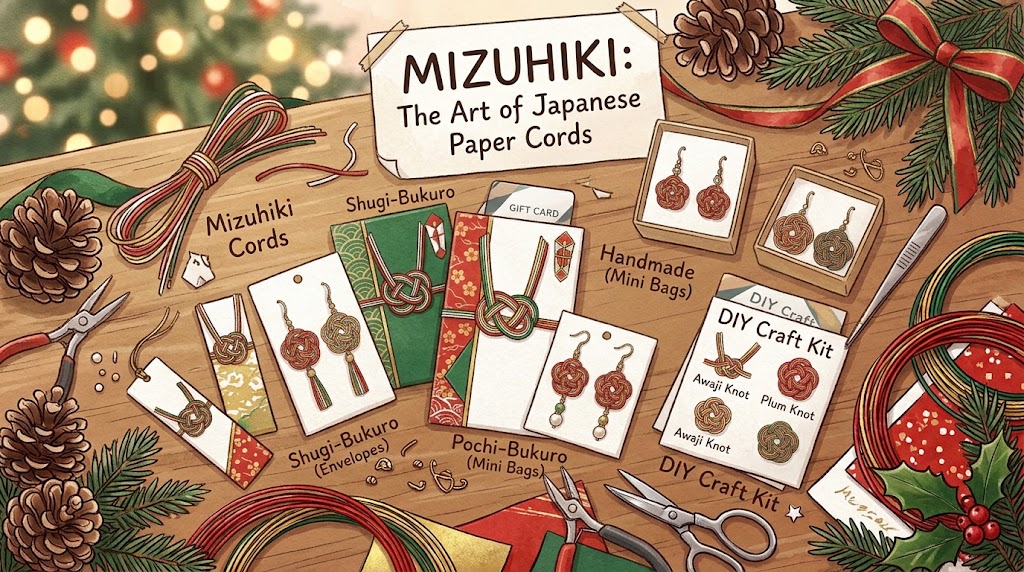
In Japan, the act of giving a gift is considered a meaningful art. For centuries, Japanese people have used a beautiful tradition called Mizuhiki to wrap their most important gifts, turning the package itself into a message of care and respect. Today, I want to share this aspect of Japanese culture with you. By the end of this guide, you will know how to use Japanese Mizuhiki envelopes (known as Shugi-bukuro or Pochi-bukuro) to make your holiday gifts feel special, and where to look for them online.
🧵 What is Mizuhiki? The Art of the Japanese Knot
At first glance, Mizuhiki looks like delicate, colorful wire, but its creation is a traditional craft.
Mizuhiki is made from tightly wound Washi (traditional Japanese paper). The paper is twisted into a thin, resilient cord, coated with natural glue, and wrapped in silk threads, gold foil, or vibrant colors.
The roots of Mizuhiki date back centuries to historical court and ceremonial gift-tying customs in Japan, where cords were used to symbolize auspiciousness and connection. Over time, tying presents with Mizuhiki became a formalized sign of respect and thoughtfulness.
Today, artisans across Japan continue this craft by hand. When you see a Mizuhiki knot, you are looking at a tradition shaped by Japanese aesthetics, simplicity, and handcrafted care.
🕊️ The Deep Meaning Behind the Knots
In Japanese culture, the knot itself carries symbolic meaning. The way a Mizuhiki cord is tied reflects the sentiment behind your gift.
Here are three common knots and what they symbolize:
-
1. Awaji-Musubi (The Lasting Bond)
This is one of the most iconic Mizuhiki knots. It is tightly interwoven and designed so pulling on both ends tightens the knot.
Meaning: A connection you hope will last, often used for celebrations and enduring relationships.
Holiday sentiment: “Our bond is strong and enduring.” -
2. Cho-Musubi (The Joyful Repetition)
This knot resembles a classic bow and can be untied and retied.
Meaning: Happy occasions that you hope happen repeatedly, such as celebrations and annual holidays.
Holiday sentiment: “Wishing you ongoing joy and celebration.” -
3. Ume-Musubi (The Plum Blossom)
Shaped like a five-petaled plum blossom, this knot is popular for gifts and accessories.
Meaning: Plum blossoms bloom early in cold weather, symbolizing resilience and a fresh start.
Holiday sentiment: “Wishing you strength, health, and a fresh start.”
When you present a gift card inside an envelope accented with an Awaji-musubi or Ume-musubi knot, you add a thoughtful cultural touch to a practical present.
🎁 How to Use Mizuhiki Envelopes for Gift Cards
In Japan, it is customary to give money for celebrations in decorative envelopes rather than handing it over plain—using larger formal envelopes (Shugi-bukuro) or smaller casual ones (Pochi-bukuro).
These envelopes also work well for standard gift cards (Amazon, Starbucks, Visa, Apple, and more).
The “Stocking Stuffer” Touch
Imagine pulling a textured Washi paper envelope accented with a decorative Mizuhiki knot out of a holiday stocking.
The paper texture and knot detail turn a simple gift card into a more personal presentation.
Bonus: Many recipients keep decorative Mizuhiki knots or envelopes as bookmarks, small ornaments, or keepsakes.
✨ Beyond Envelopes: Mizuhiki Jewelry & Accessories
Mizuhiki is not limited to envelopes. Because the cords are made from paper and thread, they are lightweight and flexible, making them popular for modern accessories such as earrings and bracelets.
- Lightweight & Comfortable: Paper-cord accessories feel light even in larger designs.
- Unique Craft Look: Distinctive braided and knotted textures stand out from standard metal jewelry.
- Paper & Thread Craft: Made from traditional paper cord and decorative wrapping.
Mizuhiki earrings or accessories make a distinctive gift idea for friends or family who appreciate Japanese crafts.
🛒 Where to Look for Mizuhiki on Amazon
You can browse Japanese Mizuhiki items online from overseas and have them shipped internationally when available.
✈️ How to Buy from Outside Japan on Amazon:
Switch the language setting on Amazon Japan to English and select your delivery country. AmazonGlobal handles international shipping for eligible items.
1. Shugi-bukuro (Decorative Gift Envelopes)
Great for presenting holiday gift cards in a classic Japanese style.
2. Pochi-bukuro (Mini Envelopes)
Compact envelopes well suited for small cards, notes, or stocking stuffers.
3. Mizuhiki Earrings & Accessories
Lightweight Japanese cord accessories crafted into decorative knots.
4. DIY Mizuhiki Craft Kits
Starter kits for people who enjoy hands-on crafts and trying traditional knot tying.
🌸 Conclusion: Give Intentionally This Year
A gift card offers freedom of choice, while a Mizuhiki envelope adds a memorable presentation that shows extra care.
Exploring traditional crafts like Mizuhiki is a simple way to bring a piece of Japanese culture into everyday gift-giving.
This holiday season, add a touch of Japanese craft to your gifts.
Guide to Our Portal Site
On this blog, we aim to share useful information for foreigners in Japan. Thank you for your support.
Life Support NAVI Top Page