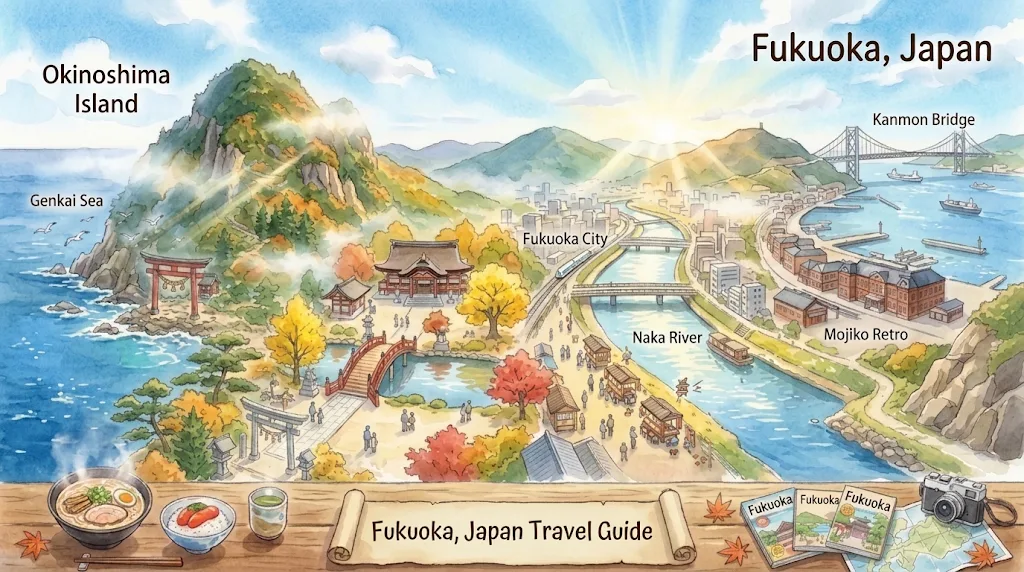
Located on northern Kyushu, Fukuoka Prefecture combines compact urban convenience with historic shrines, port-town architecture, and a lively food culture. Because Fukuoka Airport sits right next to central Hakata and Tenjin, getting around is straightforward, though day trips to Dazaifu or Mojiko and evening yatai visits benefit from a little planning. Here is a practical guide to key spots, getting around, and a sample 1-day itinerary.
🚇 Getting Around Fukuoka from Hakata & Fukuoka Airport
Fukuoka Airport (FUK) is connected directly to Hakata Station in about 5 minutes and Tenjin in about 11 minutes via the Fukuoka City Subway Airport Line. Major IC cards (ICOCA, Suica, PASMO, SUGOCA, nimoca, Hayakaken, etc.) work across subways, JR trains, and buses.
| Destination Area | Typical Route from Central Fukuoka | Approx. Travel Time |
|---|---|---|
| Dazaifu Tenmangu | Nishitetsu train from Fukuoka (Tenjin) Station to Futsukaichi Station, transfer to Dazaifu Line to Dazaifu Station, then ~5 min walk | 35–45 mins |
| Mojiko Retro (Kitakyushu) | JR Kagoshima Line (or Shinkansen to Kokura + local line) from Hakata Station to Mojiko Station | 1 hr 15 mins–1 hr 30 mins |
| Munakata Taisha | JR Kagoshima Line from Hakata Station to Togo or Akama Station, then local bus to Munakata Taisha | 55–75 mins |
| Nakasu & Tenjin Yatai | Walk or take subway from Hakata Station to Nakasu-Kawabata or Tenjin Station | 5–20 mins |
Practical note: Direct buses also connect Tenjin and Hakata with Dazaifu, and ferry boats link Mojiko across the Kanmon Straits to Shimonoseki in Yamaguchi Prefecture.
📍 Key Sights, Districts & Local Food
🏝️ Okinoshima & Munakata: Sacred Maritime Heritage
Inscribed as a UNESCO World Heritage site, the Sacred Island of Okinoshima and associated sites in Munakata reflect centuries of ancient maritime navigation and ritual offerings, with many excavated artifacts preserved as National Treasures.
Practical tip: Public access to Okinoshima itself is strictly restricted to protect its sacred status and environment. Visitors can learn about the site and view related exhibits at Munakata Taisha on the mainland (such as Hetsu-miya and the Shimpokan treasure hall).
🌸 Dazaifu Tenmangu & Kyushu National Museum
Dedicated to Sugawara no Michizane, Dazaifu Tenmangu is one of Fukuoka’s best-known shrines, reached via a shopping street lined with shops selling umegae mochi (sweet rice cakes). The Kyushu National Museum is located nearby on the hillside.
Practical tip: Plum trees around the shrine typically bloom in late winter to early spring (around February–March). The Kyushu National Museum is generally closed on Mondays (or the following weekday if Monday is a holiday), so check museum hours before combining both in a trip.
🍜 Hakata, Tenjin & Evening Yatai Food Stalls
Hakata and Tenjin form Fukuoka’s bustling urban center, while open-air yatai stalls open in the evening in areas such as Nakasu, Tenjin, and Nagahama, serving ramen, oden, grilled skewers, and small plates at compact counter seats.
Practical tip: Yatai stalls are small and often close in rain, high wind, or on designated rest days. Carry Japanese yen cash, avoid lingering if a line forms outside, and keep large luggage out of narrow walkways.
⚓ Mojiko Retro Port District (Kitakyushu)
At the northern tip of Kyushu along the Kanmon Straits, Mojiko Retro features restored Meiji- and Taisho-era buildings, waterfront promenades, and local yaki-curry (baked curry with cheese and egg).
Practical tip: Because Mojiko sits in Kitakyushu rather than central Fukuoka City, allow about 75–90 minutes each way by train and check ferry timetables if you plan to cross the strait to Shimonoseki.
🍲 What to Eat: Hakata Tonkotsu Ramen, Mentaiko & Motsunabe
Fukuoka is famous for Hakata tonkotsu ramen (pork-bone broth with thin noodles, where diners often choose noodle firmness and order a kaedama refill), mentaiko (spicy seasoned pollock roe), and motsunabe (tripe/offal hot pot with cabbage and garlic chives). Popular motsunabe and ramen shops frequently fill up at dinner, so booking ahead or going slightly off-peak helps.
🗓️ Sample 1-Day Itinerary: Dazaifu & Central Fukuoka
For a relaxed 1-day itinerary without long train rides, pair a morning trip to Dazaifu with central Fukuoka’s shopping and food districts:
- 09:00 – Head to Dazaifu Tenmangu: Take the Nishitetsu train from Tenjin toward Dazaifu and walk along the approach street.
- 11:30 – Umegae Mochi & Early Lunch: Grab a warm umegae mochi snack and lunch near Dazaifu before returning toward central Fukuoka.
- 14:00 – Tenjin & Canal City / Hakata: Spend the afternoon browsing shops, cafes, or riverside paths in central Fukuoka.
- 18:30 – Dinner (Motsunabe or Izakaya): Enjoy motsunabe, grilled dishes, or local seafood around Hakata or Tenjin.
- 20:30 – Evening Yatai Stop: Finish the night with a bowl of Hakata ramen or a quick drink at a yatai stall along the river or in Tenjin.
Plan Your Stay & Passes in Fukuoka
Compare hotels near Hakata Station or Tenjin, or check rail passes, tours, and eSIMs for Kyushu.